




Ask Dr. Meg
Got a burning question about UTIs, vaginal health, or intimate wellness?
FAQ
burning questions
about UTIs
Why do I keep getting UTIs?
Recurrent UTIs are usually a combination of bacterial migration from the gut, microbiome disruption from prior antibiotics, individual anatomy, and hormonal factors. Frequency of intercourse is the strongest behavioral predictor in younger women. Estrogen status is the strongest in postmenopausal women. The pattern is rarely random, and identifying which of these factors apply to you makes prevention more effective than generic advice.
What's the difference between a UTI and a chronic UTI?
A UTI is a single acute bacterial infection. Chronic UTI typically describes an infection where bacteria embed in the bladder wall and don't fully clear between antibiotic courses, resurfacing as symptoms whenever treatment stops. The clinical research community has historically been skeptical of chronic UTI as a category, but recent work on intracellular bacterial reservoirs and the limitations of standard culture testing has begun to validate the experiences patients have been describing for decades.
Can chronic UTI be cured?
The honest answer is that it depends on what's driving it. For some women, addressing the gut microbiome and adding evidence-supported prevention reduces recurrence to nearly zero over time. For others with embedded bladder infections or anatomic factors, specialist care may be needed. The 2025 IDSA guidelines acknowledged that chronic UTI patients deserve treatment options beyond standard acute-infection protocols, which is a meaningful shift after decades of the field dismissing the diagnosis.
What's wrong with me? I keep getting UTIs.
Short answer: there is nothing wrong with you. UTIs are incredibly common in women, especially after sex, given all of the secretions, touching, and rubbing that having sex entails. Sex hygiene matters, but you can still get UTIs even if you're a fastidiously clean person who always urinates after sex and wipes front to back. The recurrence pattern is biology, not a failure of personal habits.
How long does natural UTI prevention take to work?
Most evidence-based prevention strategies work on the timescale of weeks to months, not days. Cranberry PAC trials typically run 12 to 24 weeks. The hydration trial measured outcomes over a year. Microbiome restoration after antibiotic disruption can take six months or longer. This is part of why prevention is harder to feel than treatment is. The cycle has to be broken before the absence of the cycle is noticeable.
How can I stop UTIs caused by sex without antibiotics?
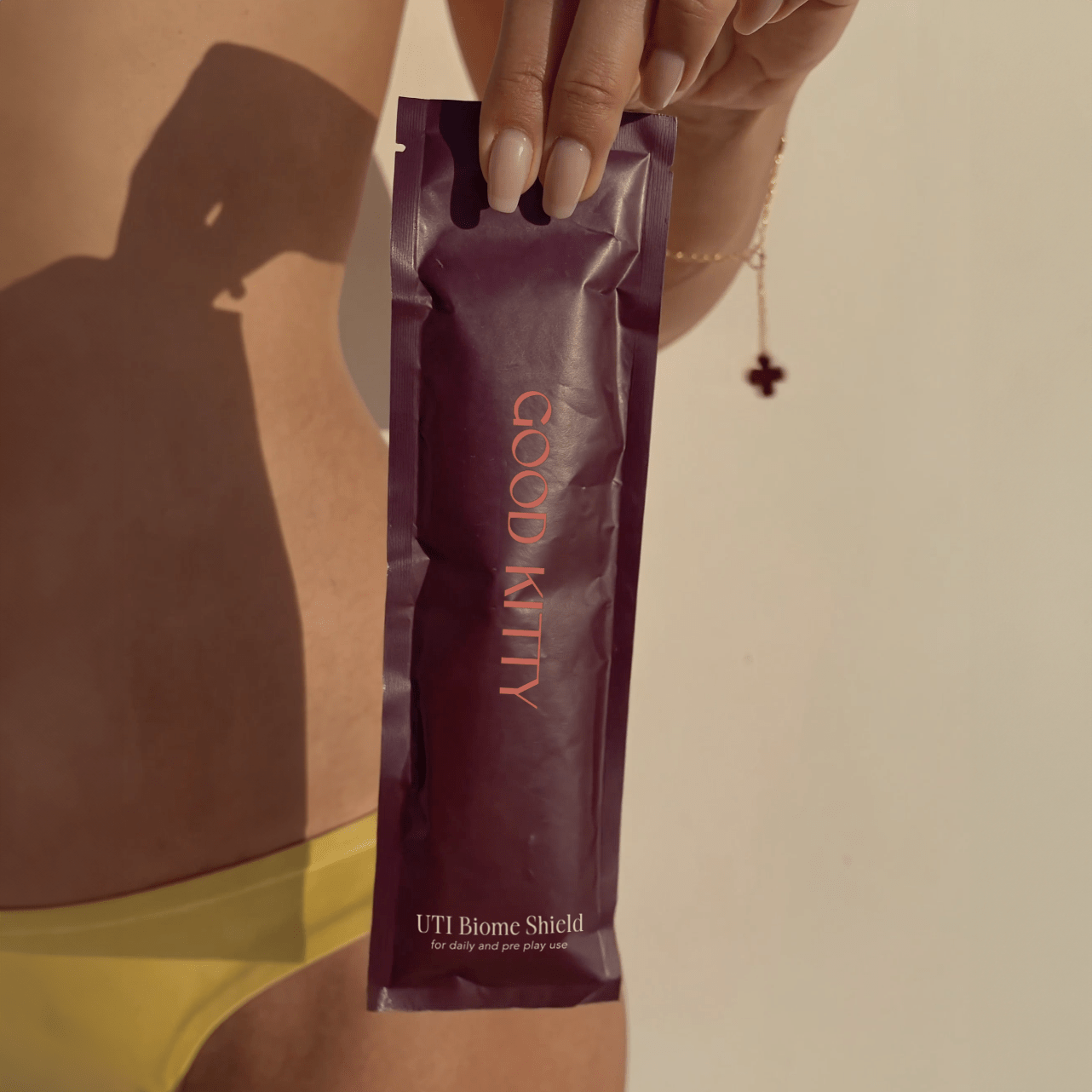
UTI Biome Shield is clinically formulated UTI prevention in one purple pill. Multi-action defense powered by our exclusive PACphenol‚Ñ¢ and BioBlocD3‚Ñ¢, engineered to stop UTIs before they start. Unlike antibiotics that disrupt your microbiome, our physician-developed formula supports beneficial bacteria, neutralizes E. coli introduced during intimate moments, and addresses the gut reservoir of UTI-causing bacteria, one of the main root causes of recurrence.
Our formula combines PACphenol‚Ñ¢ (38mg soluble PACs and polyphenols) with BioBlocD3‚Ñ¢ (d-mannose complexed with vitamin D3 and zinc) for complete UTI defense. Prebiotics restore your microbiome's natural balance, bioactives heal damaged bladder tissue, and the formula strengthens your immune response.
Is cranberry juice good for UTIs?
For prevention, cranberry juice is mostly insufficient. Standard cranberry juice and cocktail products contain less than 1mg of A-type PACs per serving, well below the 36mg threshold shown to be clinically effective. Pure unsweetened cranberry juice has more, but you'd need roughly 32 ounces daily to approach a clinical dose, which most people aren't drinking. A standardized extract is more practical and more reliable.
I'm chugging cranberry juice and my UTI isn't going away. Help!
Drinking cranberry juice isn't an effective treatment for UTIs. The PAC concentration is drastically insufficient, and the high sugar content can actually feed bacteria and worsen your infection.
If you already have a UTI, see a doctor immediately. Antibiotics are the only effective treatment for an active infection. Delaying proper medical care can lead to kidney infections and more serious health risks.
UTI Biome Shield is designed for prevention, not treatment. When taken regularly, its concentrated PACs (equivalent to 7 gallons of cranberry juice without any sugar) create a powerful bacterial barrier that prevents pathogens from adhering to urinary tract walls before infection can establish.
What is a urinary tract infection (UTI)?
A UTI is a bacterial infection in any part of the urinary system, which can include the kidneys, ureters, bladder, and urethra. The most effective treatment for an active UTI is an antibiotic. UTIs can be quite uncomfortable, and getting a same-day appointment for prescription medication can be challenging.
What are the signs of a UTI?
A UTI is quite painful, and the signs are usually easy to recognize:
- Urine that has a strong or foul odor
- An increased urgency to urinate, yet a small amount comes out
- A burning sensation when you urinate
- Urine that appears cloudy
- Possible blood in the urine
- Fever or chills
- Body aches
- Nausea
- Suprapubic pain or pressure
If you're experiencing these symptoms, call your doctor or go to urgent care.
Is a UTI common?
Yes, UTIs are very common, especially for women. They're the second most common type of infection in the body. About 10 in 25 women and 3 in 25 men will have symptoms in their lifetime.
Will a UTI go away on its own?
A UTI can sometimes resolve on its own, but it's not guaranteed. Untreated UTIs can lead to serious complications like kidney infections or sepsis. Antibiotics are the standard treatment for most UTIs and can quickly relieve symptoms. If you have UTI symptoms like burning with urination, increased urgency, or lower abdominal pain, contact a healthcare provider for advice and treatment.
Do I need a prescription to treat a UTI?
Yes. The most effective treatment for an active UTI is a prescription antibiotic from a medical professional. If you're experiencing signs of a UTI, a U.S.-licensed provider can prescribe antibiotics and send them to your local pharmacy.
What is the best antibiotic for a bladder infection?
The answer depends on your specific UTI symptoms and health history. Certain antibiotics are recommended for simple versus complicated UTIs that may have underlying contributing factors. Your medical provider will determine if you're a candidate for UTI treatment and what antibiotic makes sense for you. If you require complicated UTI treatment, your provider may suggest you visit your local doctor's office or clinic.
Can men get chronic UTIs?
Yes, though they're less common. UTIs in men under 50 are unusual and often warrant additional workup. After 50, prostate enlargement and incomplete bladder emptying drive most male UTI cases. The mechanisms and prevention strategies overlap with women in some ways (hydration, microbiome health) and diverge in others (no equivalent of vaginal estrogen). Men with recurrent UTIs should see a urologist.
Is it normal to get UTIs from sex?
Yes, this is very common.
What causes a post-coital UTI?
Friction during intercourse can push bacteria into the urethra. This is especially common in women due to anatomy.
I went to the bathroom before and after sex and still got a UTI. WTF?
Getting a UTI despite taking preventive measures like urinating before and after sex is common and medically explainable. Sexual activity can still introduce bacteria into the urinary tract despite proper bathroom hygiene because:
- Physical contact can mechanically push bacteria toward the urethra
- Anatomy plays a role: women have shorter urethras than men, making bacterial migration easier
- Hormonal changes can alter vaginal pH and bacterial balance
- Personal microbiome factors create higher susceptibility in some individuals
- Bacteria can remain viable for hours after intercourse despite urination
Even with perfect hygiene habits, around 80% of UTIs in women are associated with sexual activity. This is why additional preventive measures like UTI Biome Shield can help. The formula creates an environment where bacteria struggle to adhere to the urinary tract lining, providing protection beyond what urination alone can accomplish.
Can I give a UTI to someone else?
Yes and no. UTIs are not contagious, but partners sometimes share the same bacteria.
Does semen cause UTIs?
Semen, pre-ejaculate, and sperm are sterile. The vast majority of UTIs come from E. coli in our own GI tract. The friction of sex can push bacteria into the urethra, which increases your chances of infection. That said, while semen is not a direct cause of UTIs, it can alter vaginal pH, making it less acidic and less hospitable to the beneficial Lactobacillus bacteria that protect the urogenital tract.
Do condoms prevent UTIs?
Not directly, but they can reduce bacteria transfer.
Are sex toys causing my UTIs?
Generally speaking, no. But if toys or hands are contaminated, say from anal play, they may introduce bacteria into the urogenital tract. Some women also have a sensitivity or allergic reaction to toys made of latex or plastic and do better with glass.
Does anal play cause UTIs?
For women, the risk of UTIs is always greater regardless of the kind of sex. Our urethra is shorter, so the distance bacteria have to travel to reach the bladder is shorter too.
Ground rules for anal sex to reduce UTI risk: discard your condom after anal sex, and never use the same condom for vaginal penetration. Use different hands for anal and vaginal play (reserve one hand for anal only). Use a lube that doesn't contain sorbitol or glycerin.
Is interstitial cystitis the same as chronic UTI?
No, though they share symptoms and are often confused. Interstitial cystitis (IC), also called bladder pain syndrome, is chronic pelvic pain and urinary urgency without active bacterial infection. Chronic UTI involves persistent infection. Standard urine cultures sometimes miss the bacteria in chronic UTI, which is part of why patients are often misdiagnosed with IC and vice versa. If you're getting repeat negative cultures but the symptoms keep coming back, ask about extended urine culture or PCR-based testing.
What if I have interstitial cystitis (IC)?
UTI Biome Shield may help prevent UTIs associated with IC, but it isn't a treatment for IC itself. Because the formula is mildly acidic, sensitive users may pair it with an acid reducer. Consult your provider for IC care.
Can stress cause recurrent UTIs?
Stress doesn't directly cause UTIs, but chronic stress disrupts immune function and the gut microbiome in ways that may make recurrence more likely. The relationship is indirect but real. Sleep, stress management, and avoiding unnecessary antibiotic courses for unrelated infections are all part of microbiome health, which is part of UTI prevention.
Why does peeing feel like the burning of 1000 suns?
The burning sensation when urinating with a UTI comes from inflammation and irritation of the bladder and urethra lining caused by the bacterial infection. The bacteria irritate the delicate lining, causing it to become red and inflamed. This inflammation leads to pain and burning as urine passes through the urethra.
Why do I need to pee all the time and nothing comes out?
UTIs happen when bacteria, most commonly E. coli, spread from the anal region to the genitalia. This bacterial infection causes cystitis, an inflammation of the bladder, and is responsible for the urge to pee regardless of whether your bladder has anything to release. Doctors call this urgency and dysuria.
Why does my pee smell bad and look cloudy?
UTIs are caused by bacteria that adhere to the wall of the bladder and multiply. The bacteria and the byproducts they secrete cause a foul smell. Cloudy urine usually means it contains bacteria and white blood cells. When you get an infection, your body produces white blood cells that are released into the bladder. Both white blood cells and bacteria in your urine make it look cloudy.
Where is my urethra, anyway?
The urethra is a small opening behind the clitoris and in front of the vagina. It's much shorter in women (about 1.5 inches compared to 8 inches in men), which accounts for the much higher incidence of UTIs in women.
Is there something wrong with my hygiene?
General hygiene tips like wiping front to back and showering are helpful. But it's good to have bacteria living on and in our body. Call it flora, biome, or microbiome: bacteria support immunity, cognitive function, digestion, and hormonal balance. Sex stirs things up and may end up moving bacteria into the urinary tract that aren't supposed to be there. Showering or even using baby wipes before sex could diminish the bacteria present on your skin, but ultimately, if you're having sex, some bacteria are going to get moved around and may cause a UTI. It's not you.
Is my pH off? What does that even mean?
The pH in your vagina is relatively acidic, between 3.8 and 5. An acidic pH protects the vaginal mucosa from pathogenic organisms like E. coli, which thrive at a pH of 7.4 to 7.9. This is in stark contrast to healthy Lactobacillus species, which prefer a pH between 4.5 and 6.5. Anything you put in your vagina will alter your pH.
Is it common to get a UTI after your period?
Your period is not likely to cause a UTI. However, hygiene matters: change menstrual pads and tampons regularly, and properly wash menstrual cups to avoid introducing bacteria near the urethra.
What if I still get a UTI after taking preventative precautions?
No prevention method is 100%. Good Kitty is highly effective against E. coli–based UTIs, which cause the majority of infections, especially in sexually active women without complex medical conditions. Rare bacteria, dehydration, or user error can still cause breakthrough infections.
If it happens: treat it. Recover. Rebuild. Keep protecting.

FSA | HSA Eligible
UTI Biome Shield™
Doctor-formulated. Clinically dosed.
- Blocks UTIs before they start
- Restores your microbiome (antibiotics destroy it)
- 38mg DMAC-verified A-type PACs per dose
- Subscribe & save 15% with free shipping