


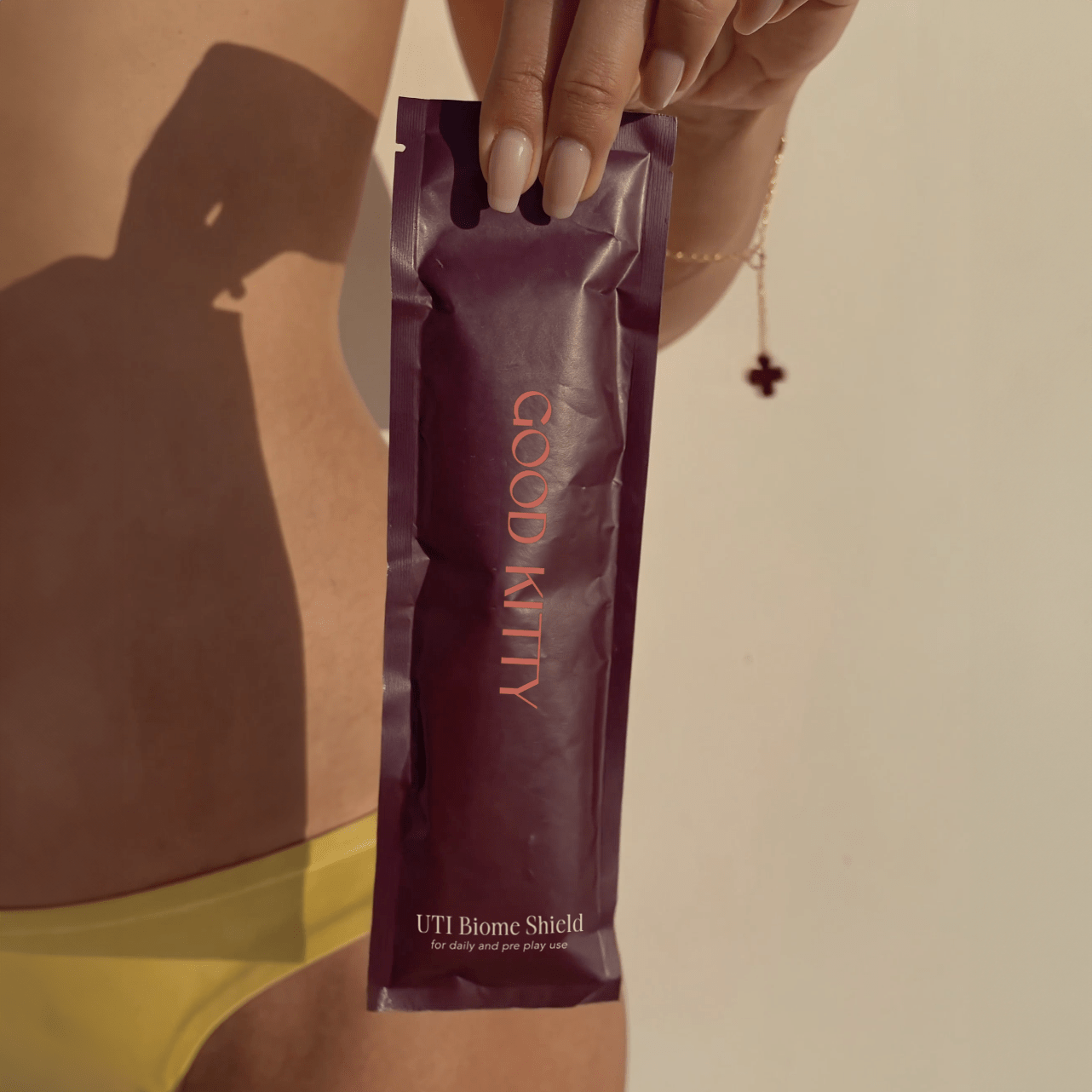


UTI Prevention Pills
medical grade actives
Gold-standard ingredients for UTI prevention
Every ingredient is clinically studied and precisely dosed. UTI Biome Shield® is evidenced-based UTI prevention.

Antibiotic-Free
Protects your microbiome, not just your bladder.

Doctor-Formulated
Created by women physicians and scientists.

Clinically Proven Ingredients
Ingredients backed by science. Made in the USA.

30-Day Guarantee
Try it risk-free. Full refund, no questions.
Engineered for the way UTIs actually happen
Recurrent UTIs aren’t random. They’re driven by bacterial adhesion, microbiome disruption, biofilm, and timing.
Every ingredient is highly bioavailable and targets one of those factors.
FDA QUALIFIED HEALTH CLAIM
Consuming 500 mg each day of cranberry dietary supplement may help reduce the risk of recurrent urinary tract infection (UTI) in healthy women.
UTI Biome Shield®
Five clinically proven ingredients, precisely paired.
UTI Biome Shield®
Cranberry PACs
38mg
The clinically studied dose of A-type PACs, in the form bacteria can't ignore.

What Cranberry PACs do
Proanthocyanidins (PACs) are the active compounds in cranberries that prevent UTIs. They attach to the fimbriae on E. coli, the tiny hair-like fibers bacteria use to grab onto the bladder wall. Once coated in PACs, the bacteria can't stick, and they get flushed out in urine before they cause infection.
Cranberry PACs are unique because they target two different receptors at once: the FimH receptor and the P-fimbriae receptor. That double action is why cranberry has been the go-to UTI ingredient for decades, long before science could explain exactly why it worked.
Why most cranberry supplements don't work
Walk down any supplement aisle and you'll see cranberry products promising UTI support. Most of them use cranberry juice powder, which contains less than 2% actual PACs by weight. A 500mg capsule of juice powder might deliver 5 to 10mg of PACs, well below the 36mg threshold shown to be clinically effective.
The other problem is verification. Without DMAC testing, the standardized method for measuring A-type PACs specifically, there's no way to know what's actually in the bottle. Many cranberry supplements list "cranberry extract" on the label without specifying PAC content at all.
What makes our cranberry different
Good Kitty uses PACphenol™, a patent-pending double-extraction process developed to preserve cranberry's full polyphenol structure while concentrating the active PACs to clinical strength.
Each capsule delivers 38mg of DMAC-verified A-type PACs, the form clinically studied for UTI prevention. The extract is 100% bioavailable, with no fillers, sweeteners, or juice powder. PACs become active in your urinary tract within four to six hours and continue working for up to twelve.
Cranberry PACs in Detail
- Clinical Dose
- 38mg
- Source
- North American whole cranberry fruit
- Bioavailability
- 100% bioavailable. Active in 4 to 6 hours, sustained activity up to 12 hours.
- Technology
- PACphenol™ patent-pending double extraction. Preserves the full polyphenol matrix while concentrating A-type PACs to clinical strength.
- Region
- United States
- Data
- DMAC-verified, peer-reviewed clinical trials
Your Questions About Cranberry PACs
How is this different from drinking cranberry juice?
Cranberry juice contains less than 1mg of PACs per serving. To reach the clinical 36mg threshold from juice alone, you'd need to drink roughly 32 ounces of pure unsweetened cranberry juice every day. Most commercial cranberry cocktails are mostly water, sugar, and other juices with minimal cranberry content. Our extract delivers the full clinical dose in a single capsule.
What are A-type PACs and why do they matter?
Proanthocyanidins come in two main structural forms. B-type PACs are common in grapes, apples, and dark chocolate. They're great antioxidants but don't prevent bacterial adhesion. A-type PACs have an additional chemical bond that lets them bind directly to E. coli fimbriae. Cranberry is one of the only common plant sources of A-type PACs, which is why other polyphenol supplements don't work for UTI prevention.
How long does it take to start working?
PACs become active in your urinary tract within four to six hours of taking the capsule and continue working for up to twelve. Taking one capsule daily maintains protective levels around the clock.
Can I take cranberry PACs with antibiotics?
Yes. Cranberry PACs work mechanically rather than chemically. They don't kill bacteria, they prevent attachment, so they don't interact with antibiotic activity. Many physicians recommend cranberry alongside antibiotic treatment for recurrent UTIs. Check with your doctor if you have specific concerns.
Is it safe to take long-term?
Cranberry PACs are well tolerated for daily long-term use in clinical studies. Unlike antibiotics, they don't disrupt your microbiome or build resistance. The only common side effect is mild GI sensitivity at very high doses, which our clinical dose stays well below.
Why don't most cranberry supplements list their PAC content?
Because most of them don't have meaningful amounts to list. Standardizing and verifying A-type PAC content requires DMAC testing, which adds cost. Most brands rely on cheaper cranberry juice powder and label it as "cranberry extract" without specifying the active compound dose. If a supplement doesn't list its PAC content, assume it doesn't have a clinical dose.
References
- Howell AB, Reed JD, Krueger CG, Winterbottom R, Cunningham DG, Leahy M. A-type cranberry proanthocyanidins and uropathogenic bacterial anti-adhesion activity. Phytochemistry. 2005;66(18):2281-2291.
- Howell AB, Botto H, Combescure C, et al. Dosage effect on uropathogenic Escherichia coli anti-adhesion activity in urine following consumption of cranberry powder standardized for proanthocyanidin content: a multicentric randomized double blind study. BMC Infect Dis. 2010;10:94.
- Foxman B, Cronenwett AE, Spino C, Berger MB, Morgan DM. Cranberry juice capsules and urinary tract infection after surgery: results of a randomized trial. Am J Obstet Gynecol. 2015;213(2):194.e1-194.e8.
- Jepson RG, Williams G, Craig JC. Cranberries for preventing urinary tract infections. Cochrane Database Syst Rev. 2012;10(10):CD001321.
- Liu H, Howell AB, Zhang DJ, Khoo C. A randomized, double-blind, placebo-controlled pilot study to assess bacterial anti-adhesion activity in human urine following consumption of a cranberry supplement. Food Funct. 2019;10(12):7645-7652.
UTI Biome Shield®
D-Mannose
500mg
A simple sugar that bacteria mistake for the bladder wall. They bind to it and get flushed away.

What d-mannose does
D-mannose is a naturally occurring sugar found in cranberries, apples, and birch wood. It looks almost identical to the receptors on the surface of bladder cells that E. coli uses to anchor itself.
When you take D-mannose, it travels through your digestive system mostly unabsorbed and concentrates in the urine. There, free-floating E. coli bind to the D-mannose molecules instead of your bladder wall. The bacteria, now stuck to a sugar instead of your tissue, get flushed out the next time you urinate.
The mechanism is mechanical, not chemical. D-mannose doesn't kill bacteria or disrupt your microbiome. It just makes them let go.
Why standalone D-mannose powders fall short
D-mannose alone addresses one bacterial strain through one mechanism. Around 90% of UTIs are caused by E. coli, which means D-mannose handles most of them, but not all. Other common UTI culprits, including Klebsiella and Enterococcus, don't respond to D-mannose because they don't use the same Type 1 fimbriae.
Standalone powders also miss the prevention layer. They can flush bacteria already in the bladder, but they do nothing to strengthen the urothelial barrier, support the immune cells that clear infections, or prevent biofilm formation. That's why D-mannose works best as part of a multi-mechanism formula rather than a single ingredient.
The dosing on most powders is also higher than necessary. Studies show 500mg works as well as 2000mg for daily prevention. The higher doses common in standalone products are designed for acute treatment, not maintenance.
What makes our D-mannose different
We use pharmaceutical-grade D-mannose extracted from birch and beech wood, dosed at 500mg for daily prevention. The sugar is fully water soluble and absorbs into the urinary tract within thirty minutes.
The bigger difference is what it's paired with. Cranberry PACs handle the receptors D-mannose can't reach. Vitamin D3 strengthens the bladder wall against future attachment. Zinc activates the immune cells that clear any bacteria that slip through. The whole-fruit polyphenols disrupt biofilms and reduce inflammation. D-mannose is one piece of a five-mechanism approach, not the whole strategy.
It also acts as a prebiotic, feeding the beneficial bacteria across the gut-vagina-bladder axis where most recurrent UTIs originate.
D-Mannose in Detail
- Clinical Dose
- 500mg
- Source
- Birch and beech wood
- Bioavailability
- Pharmaceutical-grade purity, fully water soluble. Active in the urinary tract within 30 minutes.
- Technology
- Co-formulated with cranberry PACs, vitamin D3, zinc, and polyphenols to address bacterial attachment, urothelial repair, immune activation, and biofilm disruption together.
- Region
- Europe
- Data
- Peer-reviewed D-mannose UTI prevention trials
Your Questions About D-Mannose
How is D-mannose different from cranberry?
They target different bacterial structures. Cranberry PACs bind to FimH and P-fimbriae receptors. D-mannose binds to the Type 1 mannose-binding sites. E. coli uses both to anchor to the bladder wall, so combining the two ingredients covers more attachment points than either alone. This is why our formula uses both rather than picking one.
Does D-mannose raise blood sugar?
No, not meaningfully. D-mannose is metabolized very differently from glucose. About 90% of it passes through the body unchanged and exits through urine, which is why it works for UTI prevention in the first place. Studies in people with diabetes have shown no significant impact on blood glucose at standard doses.
Why is your dose 500mg when other brands use 2000mg?
Higher doses (1500 to 2000mg) are typically used for acute UTI treatment, taken multiple times a day for several days. For daily prevention, clinical research shows 500mg is effective and better tolerated long-term. We formulated for prevention, not crisis management. If you're treating an active UTI, see your doctor.
Can D-mannose replace antibiotics?
For prevention, yes, often. Several studies have shown D-mannose to be as effective as low-dose antibiotic prophylaxis for recurrent UTIs, with far fewer side effects and no resistance risk. For an active infection, especially one that has progressed to fever or kidney involvement, antibiotics remain the standard of care. D-mannose is a prevention tool, not an emergency treatment.
Is it safe to take every day?
Yes. D-mannose has an excellent safety profile in clinical studies, including studies running over six months of continuous use. The most common side effect is loose stools at very high doses (well above what we use). Unlike antibiotics, daily D-mannose doesn't disrupt the microbiome or build resistance.
Will D-mannose work if my UTIs aren't caused by E. coli?
Probably not. D-mannose specifically targets Type 1 fimbriae, which are most common on E. coli. UTIs caused by Klebsiella, Proteus, Enterococcus, or Staphylococcus saprophyticus often don't respond to D-mannose alone. This is one reason our formula combines D-mannose with other mechanisms. If you're getting recurrent UTIs and D-mannose alone hasn't helped, ask your doctor for a urine culture to identify the specific bacteria.
References
- Kranjčec B, Papeš D, Altarac S. D-mannose powder for prophylaxis of recurrent urinary tract infections in women: a randomized clinical trial. World J Urol. 2014;32(1):79-84.
- Domenici L, Monti M, Bracchi C, et al. D-mannose: a promising support for acute urinary tract infections in women. A pilot study. Eur Rev Med Pharmacol Sci. 2016;20(13):2920-2925.
- Lenger SM, Bradley MS, Thomas DA, Bertolet MH, Lowder JL, Sutcliffe S. D-mannose vs other agents for recurrent urinary tract infection prevention in adult women: a systematic review and meta-analysis. Am J Obstet Gynecol. 2020;223(2):265.e1-265.e13.
- Phé V, Pakzad M, Haslam C, et al. Open label feasibility study evaluating D-mannose combined with home-based monitoring of suspected urinary tract infections in patients with multiple sclerosis. Neurourol Urodyn. 2017;36(7):1770-1775.
- Hayward G, Mort S, Hay AD, et al. d-Mannose for Prevention of Recurrent Urinary Tract Infection Among Women: A Randomized Clinical Trial. JAMA Intern Med. 2024;184(6):619-628.
UTI Biome Shield®
Vitamin D3
400 IU
A plant-based form of vitamin D3, bioidentical to the one your body makes from sunlight.

What Vitamin D3 does
Vitamin D3 is best known for bone health, but its role in urinary tract function is just as important. The cells lining your bladder, the urothelium, rely on D3 to maintain tight junctions, the molecular seals that keep bacteria from crossing into deeper tissue. Low D3 status weakens this barrier and is associated with higher rates of recurrent UTI.D3 also regulates the immune response. It helps the macrophages and neutrophils that patrol the urinary tract recognize and clear bacterial threats. It triggers the production of cathelicidin, an antimicrobial peptide your body makes naturally to fight infection. Without enough D3, both the barrier and the immune backup are compromised.
Why most D3 supplements come from sheep's wool
Almost every D3 supplement on the market is extracted from lanolin, the waxy oil that coats sheep's wool. The wool is sheared, washed, and the lanolin is chemically processed to convert one of its sterols into cholecalciferol, the form of D3 your body recognizes.
The process works, and the resulting D3 is bioidentical. But it isn't suitable for vegans, it carries the residue of an industrial animal byproduct supply chain, and it depends on the conditions of the wool industry. For a brand built around clean ingredients and women's bodies, lanolin felt like the wrong default.
Vitamin D2, the plant-based alternative most commonly used as a substitute, is structurally different from D3 and significantly less effective at raising and maintaining D status in the body. It's a workaround, not a solution.
What makes our D3 different
Our D3 comes from wild-harvested lichen, one of the only plant sources of true cholecalciferol on earth. Lichen is a symbiotic organism, part fungus and part algae, that produces D3 in response to UV exposure the same way human skin does. The molecule it makes is identical to the D3 in lanolin and identical to the D3 your body synthesizes from sunlight.
We dose at 400 IU, calibrated for daily maintenance alongside the dietary D3 most people are already getting. This isn't a megadose for deficiency correction. It's a steady support dose designed to maintain healthy urothelial and immune function over time.
Vitamin D3 in Detail
- Clinical Dose
- 400 IU
- Source
- Wild-harvested lichen
- Bioavailability
- Cholecalciferol, bioidentical to the D3 your skin synthesizes from sunlight. Fat-soluble, best absorbed with food.
- Technology
- Plant-based extraction from lichen, no lanolin or animal byproducts. Vegan and suitable for sensitive systems.
- Region
- North America
- Data
- Peer-reviewed D3 immune and urothelial research
Your Questions About Vitamin D3
Why only 400 IU? Other supplements have way more.
400 IU is a daily maintenance dose, not a deficiency correction dose. Most people are already getting some D3 from food, sun, or another supplement, and stacking high doses across multiple sources can push intake into ranges that aren't useful and may not be safe long-term. If you've been told you're deficient, work with your doctor on a corrective dose. This formula is designed to support a foundation that's already in place.
What's the difference between D2 and D3?
D2 (ergocalciferol) comes from yeast and fungi. D3 (cholecalciferol) is what your skin produces from sunlight and what your body uses most efficiently. D3 raises and maintains blood levels of vitamin D significantly better than D2, especially over the long term. If a supplement just lists "vitamin D" without specifying, it's worth checking which form it uses.
Is lichen-based D3 really vegan?
Yes. Lichen is a symbiotic organism made of fungus and algae, both non-animal. It's harvested sustainably without disturbing the surrounding ecosystem. The extracted D3 is molecularly identical to lanolin-derived D3, just sourced from a plant.
Can I take this if I already take a multivitamin with D3?
Probably yes, but check your total daily intake. Most multivitamins contain 400 to 1000 IU of D3. Adding our 400 IU brings most people into the standard recommended range. If you're also taking a separate high-dose D3 supplement, you may want to space them out or skip one on the days you take the other. Total daily intake above 4000 IU should be discussed with your doctor.
When is the best time to take Vitamin D3?
With a meal containing some fat. Vitamin D is fat-soluble, meaning it absorbs into your bloodstream alongside dietary fats. Taking it with breakfast or lunch, ideally with something like avocado, eggs, nuts, or olive oil, significantly improves absorption compared to taking it on an empty stomach.
How is D3 connected to UTIs?
Vitamin D regulates the cells that line your bladder and the immune cells that protect it. Low D status is correlated with weakened urothelial barriers, reduced antimicrobial peptide production, and higher rates of recurrent UTI in observational studies. D3 isn't a UTI treatment, but adequate D status appears to be part of a urinary tract that defends itself well.
References
- Hertting O, Holm Å, Lüthje P, et al. Vitamin D induction of the human antimicrobial peptide cathelicidin in the urinary bladder. PLoS One. 2010;5(12):e15580.
- Nseir W, Taha M, Nemarny H, Mograbi J. The association between serum levels of vitamin D and recurrent urinary tract infections in premenopausal women. Int J Infect Dis. 2013;17(12):e1121-e1124.
- Tran B, Armstrong BK, Ebeling PR, et al. Effect of vitamin D supplementation on antibiotic use: a randomized controlled trial. Am J Clin Nutr. 2014;99(1):156-161.
- Tripkovic L, Lambert H, Hart K, et al. Comparison of vitamin D2 and vitamin D3 supplementation in raising serum 25-hydroxyvitamin D status: a systematic review and meta-analysis. Am J Clin Nutr. 2012;95(6):1357-1364.
- Jorde R, Sollid ST, Svartberg J, Joakimsen RM, Grimnes G, Hutchinson MY. Prevention of urinary tract infections with vitamin D supplementation 20,000 IU per week for five years. Results from an RCT including 511 subjects. Infect Dis (Lond). 2016;48(11-12):823-828.
UTI Biome Shield®
Zinc Picolinate
2mg
The form of zinc your immune cells actually use, sourced from a botanical instead of a lab.

What zinc does
Zinc is one of the most active minerals in the human immune system. Your body uses it to build and deploy the cells that clear bacterial infections, including the macrophages and neutrophils that patrol the urinary tract. When these cells encounter bacteria, they release zinc directly onto the pathogens as part of the killing mechanism. No zinc, no kill.
Zinc also supports tissue repair. The cells lining the bladder and urethra turn over constantly, and zinc is required for the protein synthesis that rebuilds them. In wound healing studies, zinc-deficient tissue heals significantly slower and is more vulnerable to reinfection. Low zinc status has been correlated with higher rates of recurrent UTI in multiple observational studies.
Why most zinc supplements are poorly absorbed
Cheap zinc supplements typically use zinc oxide or zinc sulfate. Both are inorganic forms that the body absorbs poorly, often less than 25% of the dose. They're also harder on the stomach and frequently cause nausea, especially when taken without food.
The other problem with most zinc supplements is the dose. Many products contain 25 to 50mg per capsule, several times the recommended daily intake. At those levels, daily zinc supplementation can suppress copper absorption over time, creating a different mineral imbalance. The body needs zinc and copper in rough balance, and pushing one too high disrupts the other.
Standalone high-dose zinc made sense in an era when supplements were treated like crisis interventions. For daily prevention, the math is different.
What makes our zinc different
We use zinc picolinate, the form bound to picolinic acid, which is what your body uses to actually transport zinc across the intestinal wall. Picolinate is consistently ranked the most bioavailable form of zinc in absorption studies. The dose is also lower, 2mg per capsule, designed to layer on top of dietary zinc rather than replace it.
The source is Aloe ferox, a wild-harvested South African aloe known to concentrate trace minerals from its growing environment. Aloe is harder to source as a zinc carrier than synthetic alternatives, but it brings the mineral in alongside other plant cofactors that support absorption and gentle on the stomach delivery.
This is a maintenance dose, not a megadose. It works because it doesn't have to push the system past its natural balance.
Zinc Picolinate in Detail
- Clinical Dose
- 2mg
- Source
- Aloe ferox (African Cape aloe)
- Bioavailability
- Picolinate-bound for maximum absorption. Significantly better absorbed than zinc oxide or zinc sulfate.
- Technology
- Botanical mineral chelation. Zinc is delivered with its plant cofactors intact, gentler on the stomach than synthetic forms. Region: South Africa
- Region
- South Africa
- Data
- Peer-reviewed zinc absorption and UTI immune research
Your Questions About Zinc Picolinate
Why only 2mg? The recommended daily intake is 8 to 11mg.
2mg is a maintenance top-up, not the full daily requirement. Most people get the rest from food. Zinc is naturally present in meat, shellfish, legumes, seeds, and whole grains. The 2mg dose is calibrated to fill typical dietary gaps without pushing total intake into ranges that suppress copper absorption. If you've been told you're zinc-deficient, work with your doctor on a corrective dose.
What's the difference between zinc picolinate and other forms?
All zinc supplements deliver the same mineral, but the carrier molecule changes how well your body absorbs it. Picolinate binds zinc to picolinic acid, the same compound your gut uses to transport minerals naturally. Studies consistently show picolinate is better absorbed than oxide, sulfate, or gluconate. It's also gentler on the stomach.
Will daily zinc throw off my copper levels?
Not at this dose. The copper-suppression problem typically appears with daily zinc intake above 25mg over months. At 2mg added to a normal diet, total intake stays well within the range where zinc and copper coexist comfortably. If you're also taking a multivitamin with zinc, check the combined total.
Why aloe? Isn't aloe usually for skin?
Aloe ferox is different from the more familiar Aloe vera. It grows wild in South African soils that are naturally rich in trace minerals, and the plant concentrates those minerals as it grows. Using it as a zinc carrier delivers the mineral with its plant cofactors intact, which supports absorption and reduces stomach sensitivity. Aloe has a long traditional medicine history beyond skincare.
How is zinc connected to UTIs?
The immune cells that clear urinary tract infections rely on zinc to do their job. Macrophages literally pump zinc onto bacteria as a killing mechanism. Studies have correlated low zinc status with higher rates of recurrent UTI and slower clearance of active infections. Adequate zinc isn't a UTI treatment, but it's a foundation for a urinary tract that defends itself well.
Can I take this with other minerals?
Yes, with one note: high doses of calcium and iron can compete with zinc for absorption when taken at the exact same time. At our 2mg dose, this isn't usually a problem, but if you take a high-dose iron or calcium supplement separately, spacing them by a couple of hours is a reasonable precaution.
References
- Barnett JB, Hamer DH, Meydani SN. Low zinc status: a new risk factor for pneumonia in the elderly? Nutr Rev. 2010;68(1):30-37.
- Yasuda H, Tsutsui T. Infants and elderlies are susceptible to zinc deficiency. Sci Rep. 2016;6:21850.
- Barrie SA, Wright JV, Pizzorno JE, Kutter E, Barron PC. Comparative absorption of zinc picolinate, zinc citrate and zinc gluconate in humans. Agents Actions. 1987;21(1-2):223-228.
- Yousef AA, Suliman GA, Mabrouk MM. The role of vitamin D and zinc in pediatric urinary tract infections. J Med Sci Clin Res. 2017;5(4):20651-20657.
- Wessels I, Maywald M, Rink L. Zinc as a Gatekeeper of Immune Function. Nutrients. 2017;9(12):1286.
UTI Biome Shield®
Polyphenols
Whole Fruit
The full spectrum of cranberry polyphenols, preserved through a patented double extraction.

What polyphenols do
Polyphenols are the plant compounds that give cranberries their color, their tartness, and most of their medicinal reputation. In the urinary tract, they do three things at once. They reduce inflammation in the bladder wall, which lowers the tissue vulnerability that lets bacteria establish in the first place. They disrupt biofilms, the protective slime that bacteria build to hide from antibiotics and immune cells. And they act as antioxidants, neutralizing the oxidative stress that damages urothelial tissue over time.
Cranberry polyphenols also feed beneficial bacteria. Compounds like quercetin and anthocyanidins pass through the gut largely intact and serve as prebiotic substrate for Lactobacillus and other commensal species, the same bacteria that protect the gut-vagina-bladder axis from pathogenic overgrowth.
Why isolated polyphenols miss the point
The supplement market loves isolated compounds. Quercetin in one capsule, resveratrol in another, anthocyanin extract in a third. The thinking is that if a single polyphenol shows benefits in a study, more of it must be better.
That isn't how plant chemistry works. The polyphenols in cranberry evolved to function together. Flavonols stabilize phenolic acids. Anthocyanidins protect PACs from oxidation during digestion. Smaller compounds shuttle larger ones across cell membranes. Strip out one piece and you don't get a more potent version, you get a less effective one.
Most cranberry supplements sit at the other extreme. They use juice powder or low-grade extracts that don't preserve the full polyphenol matrix and don't standardize for any specific compound, leaving the user with no real way to know what's in the bottle.
What makes our polyphenols different
Our PACphenol™ patent-pending double extraction was designed specifically to preserve the whole-fruit polyphenol structure while concentrating the active compounds. The first extraction pulls the water-soluble fraction, including flavonols and phenolic acids. The second pulls the less soluble compounds, including the A-type PACs and anthocyanidins. Combined, the result is a concentrated extract with the full polyphenol profile intact.
This means the cranberry in Good Kitty isn't just a PAC delivery vehicle. The PACs handle bacterial attachment, and the rest of the polyphenol matrix handles inflammation, biofilm disruption, oxidative damage, and prebiotic support. Five mechanisms from a single fruit, the way cranberry works in nature.
Polyphenols in Detail
- Clinical Dose
- Whole Fruit
- Source
- Whole cranberry fruit (skin, flesh, and seeds)
- Bioavailability
- Full-spectrum extract preserves the polyphenol matrix, supporting absorption and synergistic activity.
- Technology
- PACphenol™ patent-pending double extraction. Captures both water-soluble and less-soluble polyphenol fractions in their natural ratios.
- Region
- United States
- Data
- Peer-reviewed cranberry polyphenol research
Your Questions About Polyphenols
How are polyphenols different from PACs?
PACs are one specific type of polyphenol. Cranberry contains many other polyphenol compounds too, including flavonols like quercetin, phenolic acids like benzoic acid, and anthocyanidins like cyanidin. PACs handle bacterial attachment. The other polyphenols handle inflammation, biofilm disruption, oxidative damage, and prebiotic support. We list them separately because they do different jobs, but they're all from the same fruit.
Aren't polyphenols just antioxidants?
Antioxidant activity is one of several functions, and probably the least interesting one when it comes to UTI prevention. The more relevant mechanisms are biofilm disruption, anti-inflammatory effects on urothelial tissue, and prebiotic support for protective bacteria. The "antioxidant" label has been overused in supplement marketing to the point of meaning very little. We use it sparingly because the actual mechanisms are more specific and more useful.
Why whole fruit instead of isolated compounds?
Plant compounds work best in their natural ratios. Cranberry polyphenols evolved together, and stripping out a single compound usually reduces its effectiveness rather than concentrating it. Studies comparing whole-fruit cranberry extracts to isolated PAC extracts consistently show better outcomes from the whole-fruit form, even when the isolated extract has higher PAC content on paper.
What does "biofilm disruption" actually mean?
When bacteria settle into the bladder, they don't stay as individual cells. They build a collective protective coating made of sugars and proteins called a biofilm. Antibiotics and immune cells have a much harder time reaching bacteria inside biofilms, which is one reason UTIs become recurrent. Cranberry polyphenols, especially flavonols and PACs, interfere with the molecular signals bacteria use to build these structures, leaving them more exposed.
How are polyphenols prebiotic?
Most cranberry polyphenols aren't fully digested in the upper GI tract. They reach the colon largely intact, where beneficial bacteria like Lactobacillus and Bifidobacterium metabolize them. The bacteria use the polyphenols as fuel and produce short-chain fatty acids and other compounds that support gut barrier function. This indirect support of the gut microbiome is part of why cranberry helps the gut-vagina-bladder axis as a whole, not just the bladder.
Can I just eat cranberries instead?
You can, but the math is hard. Fresh cranberries contain meaningful polyphenols, but most of the active compounds are in the skin and seeds, which are typically discarded or processed out. To match the polyphenol concentration in one capsule of our extract, you'd need to eat several cups of whole fresh cranberries daily, which most people aren't willing to do given that fresh cranberries are extremely tart. Juice doesn't work either since most polyphenols stay with the pulp.
References
- Blumberg JB, Camesano TA, Cassidy A, et al. Cranberries and their bioactive constituents in human health. Adv Nutr. 2013;4(6):618-632.
- Côté J, Caillet S, Doyon G, Sylvain JF, Lacroix M. Bioactive compounds in cranberries and their biological properties. Crit Rev Food Sci Nutr. 2010;50(7):666-679.
- Feliciano RP, Mills CE, Istas G, Heiss C, Rodriguez-Mateos A. Absorption, metabolism and excretion of cranberry (poly)phenols in humans: a dose response study and assessment of inter-individual variability. Nutrients. 2017;9(3):268.
- González de Llano D, Moreno-Arribas MV, Bartolomé B. Cranberry polyphenols and prevention against urinary tract infections: relevant considerations. Molecules. 2020;25(15):3523.
- Mannino G, Di Stefano V, Lauria A, Pitonzo R, Gentile C. Vaccinium macrocarpon Aiton (cranberry) as a source of bioactive compounds: chemistry, function, and applications. Plants. 2021;10(11):2528.



UTI Biome Shield® FAQs
Not all PACs (proanthocyanidins) are soluble or bioavailable.
UTI Biome Shield™ contains 38 mg of soluble, bioavailable PACs from a cranberry extract enriched using chromatography. This process preserves the full profile of prebiotic antioxidant polyphenols found in whole fruit while removing unwanted compounds like excess sugars, acids, and oxalates.
This highly active cranberry extract works synergistically with d-mannose to block bacterial adhesion, while zinc and vitamin D support the urogenital lining and microbiome for long-term urinary health.
Yes and no. Most cranberry juice is a sugary cocktail with small amounts of the powerful compounds that medical grade cranberry powders offer. Unsweetened cranberry juice is an option but is so bitter and acidic that most people do not find it palatable. This is why many clinicians recommend cranberry powders. Just read your labels, because only soluble PACs have anti-adhesion activity.
Daily Defense: Take 1 UTI Biome Shield™ capsule daily to support urinary health and microbiome balance.
Before Sex: Take 2 UTI Biome Shield™ capsules with water up to 1 hour before sex. Drink a full glass of water after sex. Return to your regular daily dose the following day.
Yes—just space them a few hours apart.
UTI Biome Shield® is a daily prevention supplement and should not be used to treat an active infection or illness.
If you are experiencing UTI symptoms, contact your doctor for antibiotics. You can continue taking UTI Biome Shield® alongside treatment and after recovery for ongoing prevention.
We always recommend checking with your doctor if you have questions about specific medications. The ingredients in UTI Biome Shield® are generally well tolerated and safe for daily use, but your healthcare provider can advise you based on your personal medical history.
No. UUTI Biome Shield® is formulated by urologists but classified as a dietary supplement and is available over-the-counter in the United States.
UTI Biome Shield® is made with ingredients that are widely regarded as safe and well tolerated.
Some people report mild bloating or loose stool when taking high doses of d-mannose. UTI Biome Shield® contains 1000 mg of d-mannose per 2-capsule serving. If you have a sensitive stomach, we recommend taking it with food.
If you are pregnant or nursing, consult your physician before use.
UTI Biome Shield® has a pH of approximately 4.44.
For comparison:
- Water has a pH of 7
- Cranberry juice has a pH of about 2.7
If you are sensitive to acidic foods or beverages, consider taking UTI Biome Shield® with food or alongside an over-the-counter acid neutralizer.
Yes, especially when derived from high-quality sources.
Yes, it is generally recognized as safe and well-tolerated.
D-Mannose is not metabolized like regular sugar, so it does not raise blood glucose levels and is considered safe for people managing diabetes.
If you have a red fruit allergy, consult your doctor before use.
Cranberries naturally contain salicylic acid, the active metabolite of aspirin. While our extraction process removes most sugars, acids, vitamins, and minerals, those with aspirin allergies should use caution and consult a healthcare provider before taking UTI Biome Shield® .
If you take Coumadin (Warfarin) or other non-vitamin K blood thinners, consult your healthcare provider before using UTI Biome Shield. While virtually all vitamin K is removed from our cranberry extract during processing, even small amounts may affect blood thinner effectiveness, so professional guidance is recommended.
During our proprietary extraction process, we remove approximately 90% of oxalates — the compounds in cranberries associated with kidney stones.
UTI Biome Shield® contains only 0.15 mg of oxalates per capsule. A high oxalate food is considered to contain more than 10 mg per serving. Foods under 2 mg per serving are considered low oxalate.
For context, many nuts, grains, fruits, and vegetables contain higher oxalate levels than UTI Biome Shield® .
UTI Biome Shield® supports urinary health and may help reduce UTIs that occur as a result of IC, but it is not a treatment for IC itself.
Because the product has a mild acidity similar to coffee or cola, those sensitive to acidic foods may prefer to take it with food or an acid reducer. Always consult your healthcare provider for appropriate IC management.
here’s what it would cost to build your own UTI Biome Shield®
We did the math. If you tried to source the exact ingredients Good Kitty uses, at the same clinical doses.
You'd be taking 10+ capsules a day
Clinical doses of cranberry PAC, d-mannose, D3, zinc, and polyphenols add up to a fistful of pills across multiple bottles. Biome Shield delivers all five in one small capsule a day.
Clinical-grade ingredients are hard to source
DMAC-verified cranberry extract, pharmaceutical-grade d-mannose, and lichen-derived D3 aren't on your local shelf. Biome Shield uses the exact versions studied in the research.
Unpatented, untested combinations are less effective
A stack of loose supplements isn't the same as a physician-formulated protocol. Our patent-pending PACphenol‚Ñ¢ and BioBlocD3‚Ñ¢ complexes are built to work together.
the hard way
Cost to source actives separately
- 10+ capsules daily across 5 bottles
- 5 reorders, 5 shipping fees


All 5 actives, one daily protocol
- One capsule. Doctor-formulated.
- Free shipping every order

UTI Biome Shield® STarter kit
subscribe & save 15%
Now84.15(from $99)
- First delivery includes 60 capsules, canister + pill stash ($149 value)
- Free shipping on every delivery
- Ongoing refills are $66.30 each
- Modify, pause or cancel anytime
- 30-day risk free guarantee
