Hell hath no fury like a woman who comes down with a UTI after sex, especially sex that didn't even deserve the risk. And hell also hath no flames as scorching as the ones tearing through your urethra when you're sitting in a doctor's office a day later, silently bargaining with whatever higher power oversees the urinary tract.
If you've ever cried in a pharmacy waiting for antibiotics after a lukewarm encounter with someone whose name you already regret, you've probably wished swift vengeance on the person who did this to you.
Before you carry out your revenge plot: a UTI isn't technically anyone's fault. They often follow sex, but you don't catch one from a partner like you'd catch chlamydia or gonorrhea. The crueler reality is that you're being punished for anatomy, biology, aging, intimacy, and reproduction, a collection of factors you didn't choose.
The Stats That Should Piss You Off
At least half of all women will contract a UTI at some point in their lifetime. One in three women will have a UTI requiring antibiotics before age 24. UTIs cost the U.S. $5.3 billion annually in treatment and missed work.
And yet, we barely talk about them. If men were afflicted with UTIs as often as women, and if a male sexual health concern cost this much, we'd talk about it openly and aggressively. There would be parades. Awareness campaigns. Research institutes. Because it's a women's issue, we're told to drink cranberry juice, pee after sex, and deal with it.
So Are UTIs Contagious or Not?
No. UTIs are not contagious. You cannot catch one from a partner the way you catch an STI.
The Bacteria Are Already There
UTIs are typically caused by E. coli bacteria, bacteria that live in your own digestive tract. During sex, these bacteria can be pushed from your vaginal or anal area toward your urethra (the tube that carries urine out of your body).
Your partner didn't give you the bacteria. The bacteria were already on you.
Sex Is the Mechanical Trigger, Not the Source
Sex doesn't infect you with new bacteria. It creates the perfect conditions for bacteria that are already present to migrate into your urinary tract.
The bacteria live near your vagina and anus (completely normal). Sex creates friction and movement that pushes bacteria toward your urethra. Your short urethra (only 1.5 inches) makes it easy for bacteria to reach your bladder. Once bacteria colonize your bladder, you get an infection.
Sex is the delivery mechanism, not the infectious source.
Can Your Partner Carry Bacteria That Trigger UTIs?
Here's where it gets nuanced. While you can't catch a UTI like an STI, your partner can harbor bacteria that contribute to your UTI risk.
Men Can Carry Bacteria Asymptomatically
Men can carry bacteria on their penis (including E. coli and other organisms) that get introduced into your vagina and urethra during sex. They don't have symptoms because male urethras are 8 inches long, much harder for bacteria to reach the bladder. But you get the infection because your anatomy makes you vulnerable.
Uncircumcised Partners May Increase Risk
Some research suggests uncircumcised men may harbor more bacteria under the foreskin, potentially increasing UTI risk for female partners. This doesn't mean uncircumcised partners cause UTIs. It just means hygiene matters.
New Partners Mean New Bacterial Exposure
When you have sex with a new partner, you're exposed to their unique bacterial ecosystem. Your body needs time to adjust to this new microbial environment, which is why "honeymoon cystitis" is so common.
You're not catching anything contagious. Your body is encountering new bacteria while it adapts.
What About Same-Sex Partners?
Female partners can transfer bacteria to each other the same way heterosexual partners can, but no one is catching a UTI. Men rarely develop UTIs after sex with women unless underlying health issues are present.
Why Sex Triggers UTIs (The Science)
Friction and pressure during sex push bacteria from the vaginal and anal area toward the urethra. The physical mechanics of penetration can force bacteria up into the bladder. Positions matter, some create more pressure on the urethra than others. Frequency matters, having sex three or more times per week increases UTI risk.
This doesn't mean you're "dirty" or did something wrong. It's anatomy and mechanics.
Why Does It Feel Like Your Partner Gave You a UTI?
Because the timing makes it feel personal. You had sex, then 24 to 48 hours later: burning, urgency, pain. It's easy to connect the dots and blame your partner.
But what's really happening: sex introduced bacteria from your body into your urethra. Maybe your partner introduced some bacteria too (normal, not intentional). Your anatomy made you vulnerable. Your vaginal microbiome or immune system might have been compromised. You didn't pee after sex, or didn't fully empty your bladder.
It's a perfect storm of factors. Not one person's fault.
Who's Actually to Blame?
Female Anatomy
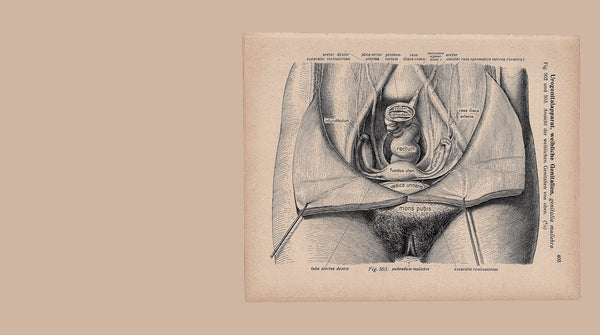
Short urethras positioned close to the vagina and anus equal a perfect setup for bacterial migration. This isn't your fault. It's biological reality.
The Healthcare System
Doctors dismiss women's UTI symptoms. Antibiotics are over-prescribed (leading to resistance). Prevention isn't prioritized. Research is underfunded.
Lack of Education
Most women don't know how UTIs actually happen. We're taught to blame ourselves or our partners. Prevention strategies aren't widely taught.
Societal Stigma
UTIs are associated with sex, so women feel shame. We don't talk openly about them. There's no public health campaign, even though they cost $5.3 billion annually.
Evidence-Based Prevention Strategies
If UTIs can't be caught, prevention focuses on reducing the conditions that allow bacteria to ascend and flourish.
Urinate after sex. A simple mechanical flush that interrupts bacterial migration. With real volume, not a polite trickle.
Stay hydrated. A well-hydrated urinary tract is less hospitable to infection.
Support your vaginal microbiome. Avoid harsh washes, scented products, and spermicides. Consider vaginal probiotics if appropriate.
Use adequate lubrication. Prevents friction and microtears that give bacteria easy entry.
Practice UTI-preventive hygiene. Avoid introducing bacteria from one anatomical area to another. Wash hands and toys. Maintain genital hygiene.
Take UTI Biome Shield daily. 38mg of DMAC-verified A-type cranberry PACs plus D-mannose, vitamin D3, and zinc. Protection that starts working within hours.
Your Partner Is Not the Architect of Your Pain. Biology Is.
UTIs are not contagious. You cannot catch one from a partner, and your partner cannot give you one. Sex may trigger a UTI, but the real cause lies in anatomy, microbial balance, and physiology.
You deserve pleasure without pain. You deserve answers. You deserve prevention that actually works.
If you experience recurrent UTIs, see a healthcare provider to rule out underlying conditions and develop a comprehensive prevention plan.
Frequently Asked Questions
Are UTIs contagious?
No. UTIs are not transmitted between partners the way STIs are. They're caused by bacteria (usually E. coli) that already live in your own digestive tract migrating into your urinary tract, often during sex. Your partner can carry bacteria that contribute to your risk, but you can't "catch" a UTI in the traditional sense.
Can my partner give me a UTI?
Not in the sense of transmitting an infection. Your partner can carry bacteria on their body that get introduced during sex, which can contribute to your risk. But the bacteria causing the infection are usually already present on your body, and the act of sex is what mechanically pushes them toward the urethra. Female anatomy (a short urethra positioned close to vaginal and anal sources of bacteria) is what makes UTIs so much more common in women than in men.
Why do I get a UTI every time I have sex with a new partner?
This pattern, sometimes called "honeymoon cystitis," is real. When you have sex with a new partner, you're exposed to their unique bacterial ecosystem. Your body needs time to adapt, during which UTIs are more common. The risk usually decreases as your body adjusts. Pre-coital UTI prevention with a clinical-dose PAC supplement and post-sex urination are the most effective strategies during this window.
Does my partner need to be treated if I keep getting UTIs?
Generally no, since UTIs aren't transmitted like STIs. However, if you have recurrent UTIs and standard prevention isn't working, it can be worth discussing with your provider whether your partner could benefit from any hygiene changes. In rare cases involving recurrent infections with the same bacterial strain, providers occasionally recommend partner evaluation, but this isn't routine.
Can men get UTIs from women?
Men can develop UTIs, but rarely from sexual contact with a female partner. The male urethra is 8 inches long compared to the female urethra at 1.5 inches, which gives bacteria a much longer path to climb before reaching the bladder. Men who develop UTIs typically have underlying conditions like prostate problems, kidney stones, or anatomical abnormalities. The "I gave him my UTI" worry rarely plays out the way women fear.
Is anal sex more likely to cause UTIs?
Anal sex doesn't directly cause UTIs, but it can introduce gut bacteria (including E. coli) into the vaginal area, which then migrates to the urethra during subsequent vaginal sex. Switching between anal and vaginal sex without changing condoms or proper hygiene is one of the highest-risk patterns for UTI introduction. If you enjoy anal play, condom changes between activities and thorough cleaning are the protective steps.
Why do my UTIs always come back after antibiotics?
Several possibilities. The most common is that antibiotics disrupt your vaginal microbiome, which makes the next UTI easier to develop in a self-perpetuating cycle. Less commonly, you may have a chronic UTI rather than recurrent UTIs, which means biofilm-protected bacteria that survive antibiotic courses and resurface as new "infections." If you've had more than three UTIs in a year, see a urogynecologist or urologist who specializes in chronic UTI for advanced testing.