My friend started getting heart palpitations in her early forties. The usual thing: heart racing, skipping beats, sometimes mid-sentence in a meeting, sometimes lying in bed at 2 a.m. She did what you're supposed to do. She went to her doctor.
Her doctor sent her to a cardiologist. The cardiologist ordered an EKG. The EKG was normal. So they ordered a Holter monitor (the heart-rate recorder you wear for days). That was normal too. So they ordered an echocardiogram. Normal. So they ordered a stress test. Normal. By the time someone finally suggested it might be hormonal, she had spent thousands of dollars and months of anxiety on a medical workup that found nothing because nothing was wrong with her heart.
She was perimenopausal. Heart palpitations are a documented symptom of declining estrogen. The fix was a prescription that costs less than her last cardiology copay.
Nobody had told her this. Not her primary care doctor. Not the cardiologists. Not her mother, not her older sister, not any woman she'd known. The information existed in medical literature. It was knowable. It just wasn't part of the conversation.
I had a version of this too. Heart palpitations a few months ago. I only found out because my cofounder, Dr. Meg, recently wrote an article about the strange menopausal symptoms no one talks about. So I talked to my doctor, we tweaked my HRT, and the palpitations stopped. Dr. Meg has been dealing with electric-shock sensations shooting up through her head. Itchy skin shows up in another column of the same list. The symptoms are bizarre, specific, and barely acknowledged in mainstream medical conversation. Estrogen receptors are everywhere in the body. When the estrogen goes, all manner of strange symptoms can crop up, and they can be weird.
Between Dr. Meg and me, we've had over a hundred UTIs in our adult lives. We're now moving into midlife, perimenopausal, along with our friends, discovering that years of unexplained symptoms may be attributed to a hormonal collapse no one had warned us about. Welcome to women's intimate health in 2026. The information is available. Kind of. The cultural script that would have made it accessible doesn't exist.
Welcome to the renegotiation.

The Cultural Shift, Briefly
The strategists at Concept Bureau published a piece of work this year about a pattern in modern life they call "the implicit becomes explicit." Their argument, broadly, is that the shared cultural scripts that used to tell us how to do things (how to date, how to marry, how to raise children, how to age, how to be a man or a woman or a worker or a citizen) have collapsed without being replaced. We're now in a moment where everything that used to be implicit, the assumed knowledge embedded in shared culture, has to be made explicit. Negotiated out loud. Named, articulated, agreed upon, taught.
It's a broad cultural argument and it applies almost everywhere. But there's one place it applies with particular force, and that's the topic this brand exists to talk about: women's intimate, sexual, hormonal, and bodily lives.
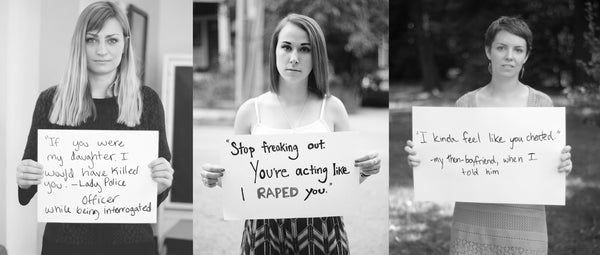
The cultural scripts that used to govern this domain were never adequate to begin with. They weren't built by women, and they were constructed to keep women's bodies polite, quiet, and available. Women suffered through, did what they were told to do, and got the symptoms they got, all without the language or permission to name what was happening. The information existed; the cultural script didn't include sharing it.
Now that the script is collapsing, the question is what we're going to replace it with.
The Failure of the Old Implicit Script
Consider what women have been culturally trained to expect, or perhaps not to expect.
We weren't told that perimenopause symptoms include heart palpitations, electric shocks, itchy skin, joint pain, brain fog, vertigo, tinnitus, formication (the sensation of insects crawling on your skin), restless legs, mouth ulcers, frozen shoulder, sensitivity to body odor, sudden food sensitivities, and dozens of other things that send women to specialist after specialist for workups that find nothing because the answer isn't in any single specialist's domain. The information lives in obscure medical journals and the occasional menopause-specific podcast. It doesn't live in the cultural script.
We weren't told that recurrent UTIs are not a normal part of being a woman, that the cycle of antibiotic prescriptions our doctors offered us for years for lack of a better solution is part of the problem, that non-antibiotic prevention is now the AUA-recommended first-line strategy for recurrent infections, or that there's a clinical threshold of A-type proanthocyanidins from cranberry that actually works (and that most supplements miss it by a factor of ten). The information exists. The cultural script doesn't include sharing it.
We weren't told that vaginal estrogen reduces UTI recurrence by 50 to 60% in postmenopausal women, that the FDA's black box warning on prescription estrogen was based on data from systemic oral estrogen and doesn't apply meaningfully to the local cream, that the cream is safe and effective and most women who would benefit from it never get prescribed it. The information exists. The cultural script doesn't include sharing it.
We weren't told that an orgasm is physiologically inhibited by chronic anxiety, that bodies dealing with low-grade infections and under-treated perimenopausal symptoms don't respond to sex the way they would otherwise, that the slow degradation of women's intimate experience in their forties isn't an inevitable feature of aging but a treatable consequence of neglect and misunderstanding of the nature of arousal. The information exists. The cultural script doesn't include sharing it.
We weren't told what to say in bed, how to ask for what we want, how to tell a partner that something hurts, how to discuss prevention without killing the mood, how to integrate care for our bodies into the erotic life rather than treating them as separate phases. The information exists, in scattered sex-positive corners of the internet and a handful of books. The cultural script doesn't include teaching it.
This is not a list of small omissions. This is what an entire cultural system of implicit assumption looks like when it's optimized to keep women uninformed about their own bodies. That the script we inherited was designed to fail us isn't an accident. It was designed to keep certain things invisible.
 The Renegotiation Forced by the Information Age
What's changed is not that women's bodies have changed. It's that the conditions that produced the old cultural script have changed.
Information is no longer scarce. It's everywhere. An entire library of peer reviewed literature on perimenopause is one search away. The research on UTI prevention is one paywall away. The vocabulary of explicit sexual communication is in every podcast, every Substack, every group chat. The information was always asymmetrically distributed; now the asymmetry is breaking down.
And the women experiencing the symptoms are no longer willing to suffer in silence because the script said to. We're naming things. We're comparing notes. We're showing each other lists of symptoms and saying, "this... this is what's happening to me. Is this happening to you." The implicit becomes explicit because we are making it explicit, woman by woman, in group chats and DMs and frank conversations and brand newsletters like this one that look more like manifestos than marketing.
This is the renegotiation. And like all renegotiations after a long period of implicit consensus, it's uncomfortable. The old script told women to be quiet, accommodating, modest, available, and to interpret their own bodies through the limited vocabulary the culture offered. The new condition asks women to do work the old script never required: to know our own bodies in greater detail, to advocate for ourselves with providers who sometimes don't know what we know, to ask for what we want in bed, to name symptoms that don't have names in the public conversation, to make explicit what was supposed to stay invisible.
It's exhausting. It's also the only way out.
 The Skills the Renegotiation Requires
If the cultural script has collapsed and we're in the renegotiation phase, what does that actually look like? What skills does this new condition require?
I'll be specific.
Body literacy. Knowing what's happening in your body. Not in a hypochondriac way, but in the way an athlete knows her sport. The symptoms of perimenopause. The mechanism of recurrent UTIs. The function of vaginal estrogen. The difference between a UTI and a yeast infection and bacterial vaginosis and urethral irritation. The role of the vaginal microbiome. The relationship between gut health and bladder health. None of this used to be required knowledge for ordinary women. Now it is, because the health providers who should have learned it didn't, and the cultural script that should have transmitted it doesn't.
Provider advocacy. Being willing to advocate for yourself in conversations with your health care provider. Not deferring to a clinician who learned about perimenopause for three hours in medical school twenty years ago and hasn't updated since. Asking for what you need by name. Bringing printouts of guidelines if necessary. Switching providers when the current one can't or won't. This can be uncomfortable work. The cultural script trained women to be cooperative patients. The new condition requires us to be informed consumers of medical care.
Explicit verbal communication during sex. Saying what you want. Saying what you don't want. Saying what feels good and what doesn't. Saying when something hurts. Saying when something feels amazing. Naming desires and limits out loud. The cultural script trained women to perform pleasure rather than have it; the renegotiation requires the actual having, which requires the actual naming.
Explicit prevention as practice. Treating your body as a system that responds to deliberate inputs, not as something that either works or doesn't. Daily UTI prevention. Daily vaginal estrogen application if you're peri- or post-menopausal. Lube before sex when you need it. Care after sex when your tissues need it. Hydration, nutrition, sleep. The implicit script positioned all of this as either too much fuss or too clinical for an erotic life. The renegotiation positions it as the infrastructure that makes the erotic life possible.
Naming things that have no public name. Aftercare. Sex kits. The lubrication problem. Hormonal heart palpitations. Electric-shock sensations. The peri-pause window between perimenopause and menopause where most of the symptoms cluster. The post-orgasmic recovery period for women. Cervical mucus quality across the cycle. The way certain medications affect arousal. All of this is happening to women's bodies and most of it doesn't have widely used vocabulary. We're building the vocabulary in real time.
Relationship-specific negotiation. Asking your partner to participate in your care. Not in a needy way, in a "this is what intimacy looks like now" way. Letting your partner know what your body needs. Letting your partner know how to ask. Letting your partner know that prevention can be foreplay, that aftercare can be enjoyable, that the previously hidden bodily work of being a woman in your forties is part of what you're inviting them into. The cultural script told us to keep all that hidden so we could remain attractive. The renegotiation says the work of being visible is part of being seen.

What It Looks Like in Practice
A woman with recurrent UTIs spends two decades on the antibiotic merry-go-round. After her tenth bladder infection in a year, she finally finds a prevention-first framework: a daily anti-adhesion supplement, more water, vaginal estrogen for the postmenopausal piece of her risk. The infections stop. What she'd been told was bad luck turns out to be a treatable systemic issue nobody had bothered to explain.
A couple in their fifteenth year of marriage starts having sex more often. Nothing dramatic happened. She finally told him what she actually wanted, and he finally stopped guessing. He learns to ask whether she's used her estrogen cream tonight the way he'd ask whether she'd brushed her teeth, except with more attention than he gives the teeth, and by the third or fourth time it isn't weird anymore. The renegotiation is the previously implicit becoming explicitly named, and a long marriage finding new aliveness in it.
A perimenopausal woman tells her best friend that the electric-shock sensations running down her arms are a documented symptom of estrogen decline. The friend tells her sister. The sister tells the group chat. Three women in that chain book appointments with menopause specialists inside a month. This is the part the medical system keeps missing: women are figuring out routes around its gaps, one conversation at a time.
A founder builds a women's health brand whose entire editorial position is that prevention, pleasure, and information should be openly discussed. Other founders build adjacent brands in pelvic health, perimenopause, sexual wellness, and microbiome support. Together, this generation of femtech founders is constructing the cultural script that should have existed all along. The renegotiation looks like an industry being built to fill a vacuum the established institutions refused to fill themselves.
What This Means for Brands
I want to be honest about the brand argument here, because the cultural shift is real but it has commercial implications and pretending otherwise would be dishonest.
Brands that serve women have two options in this moment. They can keep operating on the old implicit script (women as passive consumers, products as quick fixes, marketing as performance of femininity, no real information about how anything works or why) or they can participate in the renegotiation (women as informed agents, products as part of a deliberate practice, marketing as education, real information about mechanisms and tradeoffs).
Good Kitty has tried to be in the second camp. We sell UTI Biome Shield, which is one product. We talk publicly about the 2025 AUA guideline shift toward non-antibiotic prevention, about the PAC solubility problem, about vaginal estrogen and its underutilization, about the gut-bladder axis, about why most cranberry supplements don't work. We recommend other companies' products when they're genuinely useful and we don't sell the category, including Curious Intimacy's post-coital recovery serum and myUTI's PCR testing for women whose cultures keep coming back falsely negative. We try to give the information that the cultural script forgot to provide.
This is not the only way to build a brand right now. There are other approaches, some more profitable in the short term. But the brands that will matter in this generation of women's health are the ones that participate in the renegotiation rather than the ones that exploit the persistence of the old implicit assumptions.
The other companies operating in this space know who they are. The ones who sell product by convincing women their vaginas should taste like pineapple. The ones still selling low-grade cranberry products that have zero efficacy in preventing recurrent UTIs. The ones offering "feminine wellness" products that are scented washes designed to disrupt the very microbiome they claim to support. The ones with celebrity endorsements and no clinical data. The renegotiation is not friendly to them. The women who do the work the renegotiation requires don't buy what those brands are selling. They buy from the brands that respect their intelligence.
What It Costs and What It Returns
The renegotiation is exhausting. I want to acknowledge that.
The old implicit script asked very little of women, intellectually. You followed it, you stayed quiet about your symptoms, you accommodated, you suffered through what you were supposed to suffer through, and you tried not to make a fuss. The cost was your body's experience, but the cognitive load was light.
The new condition asks a lot. Know your own anatomy in detail. Know the research on whatever you're dealing with. Advocate with providers who don't always know what you know. Ask for what you want in bed. Name what hurts. Make the previously hidden visible. Educate your partner. Educate your friends. Help build the cultural script that should have already existed. This is real work and it's unfairly distributed; women shouldn't have to do their own medical education plus their partners' sex education plus the bolster the broader cultural conversation, on top of everything else they already do.
But here's what the work returns.
Fewer UTIs. Less menopausal misery. Better sleep. Less anxiety. Heart palpitations that go away once you address the actual cause. Sex that gets better instead of worse over time. Relationships that deepen rather than calcify. The cognitive freedom that comes from no longer suffering through symptoms you don't have words for. The political power of being a woman who actually knows what's happening in her body. The ability to look at the medical system, the supplement industry, the wellness influencer economy, the culturally produced anxieties of being a woman in her midlife, and see through them.
The renegotiation isn't a trend. It's the unfinished work of women's autonomy, finally being done. The implicit scripts that failed women were never going to update themselves. The women refusing to follow them are doing the cultural infrastructure work that the institutions wouldn't.
This is the moment to be building the explicit version of women's intimate life. The vocabulary, the products, the practices, the rituals, the conversations, the relationships, the medical knowledge, the brands that respect us, and the political demand that the established institutions catch up. Anyone serving women in 2026 who isn't doing this work is doing the other thing. There isn't a neutral middle position.
My friend got her cardiology bill last month. She paid it because she had to. But she texted me a photo of it with a single message: "Imagine if someone had just told me, could be your hormones." That's what the renegotiation feels like from the inside. Imagine if someone had just told us. Now we tell each other. We make the implicit explicit. We build the script that should have been here all along. We are the script now.
And we are very, very ready.

Frequently Asked Questions
Can perimenopause really cause heart palpitations?
Yes. Estrogen receptors are all over the body, including the heart, so when estrogen starts fluctuating and declining, palpitations are a documented symptom. They're common enough that plenty of women get full cardiac workups that come back normal before anyone mentions hormones. A normal EKG doesn't mean nothing's happening; it can mean the cause is hormonal rather than cardiac. If you're in your forties with new palpitations and otherwise clear heart tests, it's worth asking a provider about perimenopause.
Why do doctors keep prescribing antibiotics for recurrent UTIs instead of preventing them?
Largely because that was the standard for a long time and many providers haven't updated. As of the 2025 AUA guidance, non-antibiotic prevention is recommended as a first-line strategy for recurrent UTIs, not a last resort. Repeated antibiotic courses carry real costs to the microbiome and drive resistance, so a prevention-first approach, addressing why the infections keep happening, is increasingly the standard of care rather than an alternative one.
Does vaginal estrogen actually reduce UTIs, and is it safe?
In postmenopausal women, vaginal estrogen has been shown to reduce UTI recurrence substantially. On safety, the FDA black-box warning that scares many women off was based on systemic oral estrogen, not the local vaginal cream, and major medical societies have called for that warning to be reconsidered for the topical form. Many women who would benefit never get offered it. It's a conversation worth having with an informed provider.
What's the difference between a UTI, a yeast infection, and BV?
They get confused constantly because the discomfort can overlap, but they're different. A UTI is a urinary-tract infection, usually bacterial, with burning during urination and urgency. A yeast infection is fungal, with itching and thick discharge. Bacterial vaginosis is a bacterial imbalance in the vaginal microbiome, often with a thin discharge and odor. They're treated differently, which is why self-diagnosing and reaching for the wrong fix is so common and so frustrating. When cultures keep coming back negative but symptoms persist, more sensitive PCR testing can help.
What does "the renegotiation" actually mean?
It's the name this essay gives to a shift: the old cultural scripts that were supposed to tell women how to understand their bodies, age, and intimate lives have collapsed, and they were never adequate to begin with. What used to be left implicit now has to be made explicit, named out loud, advocated for, taught woman to woman. The renegotiation is women doing that work, building the body literacy, the vocabulary, and the cultural infrastructure that the medical system and the old scripts never provided.
Concept Bureau's strategists publish cultural research that's worth the subscription if your work requires staying ahead of these patterns. The framework that informs the first part of this essay is theirs; the application to women's intimate health is mine. Their Exposure Therapy publication is here: https://exposuretherapy.com.
Continue Reading
The renegotiation isn't a single essay. It's the whole library of work we're building. A few starting points:
- New to the censHERship argument? Read the series →
- Want the prevention-first framework for recurrent UTIs? Why UTIs Are More Common in Women →
- Curious about the science we cite throughout? The Gut-Bladder Axis and Urinary Health →
- Want the explicit-communication argument applied to the bedroom? Dirty Talk and the Best Foreplay →
- Interested in long-term relationships and erotic intelligence? Unlocking Erotic Intelligence (an Esther Perel essay) →
- Want to understand how the medical system actually fails women on UTI diagnosis? Why Modern PCR Testing Is Revolutionizing UTI Care →
- Looking for the broader public health context? Antimicrobial Resistance Is a Women's Health Issue →