You have all the symptoms. Burning when you pee, urgency, that low pelvic discomfort that feels like a UTI gearing up. You go to the doctor, get the antibiotics, take the full course. And the symptoms either don't fully resolve, or they come back within days.
Maybe what you have isn't a UTI.
Urethral irritation, sometimes called honeymoon urethritis, can mimic UTI symptoms closely enough to fool both you and your doctor. The difference matters because antibiotics don't help irritation. They just disrupt your microbiome and make the next actual UTI more likely.
Here's how to tell which is which, and what to do about each.
What Urethral Irritation Actually Is
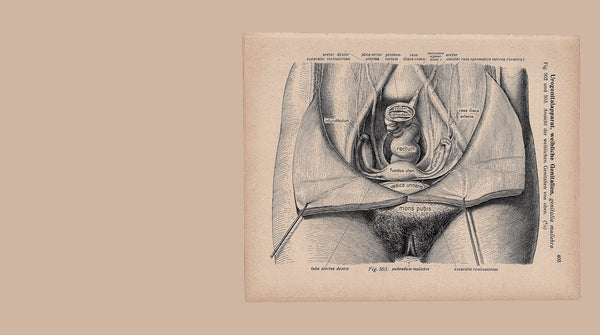
The urethra is the tube that carries urine out of your bladder. It's lined with sensitive tissue, and it sits right next to your vaginal opening. When that tissue gets inflamed (from friction, chemicals, or pH shifts) it can hurt the same way an infected urethra hurts. Burning when you pee. Discomfort. Sometimes urgency.
But there's no infection. The bacteria aren't there. The pain is mechanical or chemical, not bacterial.
This is more common than most women realize, and especially common in younger women, after periods of frequent sex, after starting with a new partner, or after exposure to irritants the body isn't used to.
UTI vs. Urethral Irritation: The Differences
Bacterial UTI
Positive bacterial culture (or PCR test for biofilm-driven infection).
Symptoms worsen without treatment.
Responds to antibiotics, usually within 24 to 48 hours.
May include fever, chills, or back pain in more serious cases.
Urine may be cloudy, foul-smelling, or visibly bloody.
Frequent urgency with little output is common.
Urethral Irritation
Negative urine culture.
Symptoms typically improve on their own within 1 to 3 days.
Antibiotics don't help (and may make things worse over time).
Symptoms are local to the urethra. No fever, no systemic signs.
Urine usually looks normal, clear and yellow.
Burning may be more on contact than throughout urination.
The single most diagnostic test: get a urine culture. If it comes back negative and your symptoms are improving, you're likely dealing with irritation, not infection.
What Causes Urethral Irritation
Several common triggers, often in combination.
Mechanical Friction
Sex without enough lubrication is the most common cause. Friction during penetration can irritate the urethra directly through the vaginal wall, causing inflammation that mimics UTI symptoms 24 to 48 hours later.
Chemical Irritants
Scented body washes, harsh soaps, douches, scented tampons or pads, fragranced laundry detergents on underwear, certain bath products. The urethra and surrounding tissue are sensitive to chemical exposure, especially when products contact the area directly or get rinsed over it during showering.
Allergic Reactions
Latex condoms, certain spermicides, lubricants with parabens or warming agents, even some natural ingredients like coconut oil for women with sensitive tissue. Allergic urethritis can present exactly like a UTI but won't show bacteria on culture.
pH Changes
Semen is alkaline (around pH 7.2 to 8). The vagina is mildly acidic (3.8 to 4.5). Frequent exposure to semen without barrier protection can shift vaginal pH, which can irritate the urethra. Some women notice this pattern with new partners or after periods of more frequent unprotected sex.
Sensitivity After Abstinence
If you haven't had sex in a while, the tissue can be more reactive when you do. The first few times after a long break can produce irritation symptoms that look like a UTI but are actually just your body re-acclimating.
Spermicide Exposure
Nonoxynol-9 (the most common spermicide) is a known irritant for many women. It can cause urethral and vaginal inflammation that gets confused for infection. It also disrupts the vaginal microbiome, which raises actual UTI risk on top of the irritation.
How to Treat Urethral Irritation
Since there's no infection, antibiotics are the wrong tool. The right approach is to remove the trigger and let the tissue heal.
Hydrate aggressively. Diluted urine is less irritating to inflamed tissue than concentrated urine. Drink water consistently for the next 24 to 72 hours.
Use adequate lubrication during sex. Friction is the most common single cause, and good lubricant solves it. Choose a pH-balanced, low-osmolality, fragrance-free water-based formula. Avoid glycerin, warming agents, and anything that tingles or burns.
Avoid known chemical irritants. Skip scented bath products, douches, and fragranced laundry detergent on your underwear until symptoms resolve.
Wear breathable cotton underwear and avoid tight synthetic clothing for a few days.
Use a peri bottle while urinating to dilute urine on contact and reduce burn.
Communicate with your partner. If sex is the trigger, slowing down, using more lube, or taking a few days off lets the tissue recover. This isn't a "you did something wrong" conversation. It's just biology.
If symptoms haven't improved within 2 to 3 days, see a provider. Persistent symptoms with negative cultures can indicate something else (interstitial cystitis, vulvodynia, or biofilm-driven chronic UTI that standard cultures miss). Worth a workup with a urogynecologist if the pattern keeps happening.
Why This Misdiagnosis Matters
Every time a woman gets antibiotics for what's actually irritation, three things happen.
The antibiotic doesn't help the actual problem.
The antibiotic disrupts her vaginal microbiome, which raises her risk of a real UTI in the next few weeks.
She loses faith in her own body's signals because "the medicine isn't working."
This pattern is part of why some women cycle through years of "recurrent UTIs" with mediocre antibiotic results. They're not all UTIs. Some of them are irritation. The treatment gap is real.
If your "UTIs" follow a clear pattern (always after sex, always with a new partner, always after using a particular product), and your cultures sometimes come back negative, that's worth raising with your provider. Ask whether some of these episodes might be irritation rather than infection. The right answer might be a different lubricant, a different birth control method, or a different cleansing routine, not another round of antibiotics.
What Helps Both UTIs and Urethral Irritation
The line between irritation and actual UTI isn't always clean. Sometimes you have one, sometimes you have both, sometimes irritation creates the conditions for an infection to develop. A few prevention basics serve both:
Pee with real volume after sex. The mechanical flush helps clear bacteria and dilutes irritants on the urethra.
Stay hydrated daily. Diluted urine is less inflammatory and less hospitable to bacteria.
Use pH-balanced, low-osmolality, fragrance-free lubricant during sex. Reduces friction that causes irritation and protects the vaginal microbiome that suppresses E. coli.
Eliminate spermicide if you're using it. The single biggest dual-risk product.
Take a clinical-dose UTI prevention supplement daily. UTI Biome Shield blocks E. coli adhesion, so even if the irritation creates an opening, the bacteria have a harder time taking hold. 38mg of DMAC-verified A-type cranberry PACs plus D-mannose, vitamin D3, and zinc.
When in Doubt, Get a Culture
If you have UTI-like symptoms and you're not sure whether it's an infection or irritation, the answer is the same either way: get a urine culture. It's a simple test. It tells you definitively whether bacteria are present. And it lets your provider make the right call about whether you need antibiotics.
Treating irritation with antibiotics doesn't help, and treating infection without antibiotics lets it progress. The culture is the difference.
You deserve to know what's actually happening in your body, not just to keep cycling through prescriptions for a problem that may not be the one you're being treated for.
Frequently Asked Questions
What is urethral irritation?
Urethral irritation is inflammation of the urethra without an infection. The symptoms can closely mimic a UTI (burning when you pee, urgency, low pelvic discomfort) but a urine culture comes back negative. It's caused by mechanical friction, chemical irritants, allergic reactions, or pH changes rather than bacteria. It usually resolves on its own within a few days when the trigger is removed.
How can I tell if I have a UTI or just irritation?
The most reliable test is a urine culture. UTIs show bacteria on culture, irritation doesn't. UTI symptoms typically worsen without treatment, while irritation improves on its own within 1 to 3 days. UTIs sometimes include fever or back pain. Irritation is local to the urethra only. UTI urine is often cloudy or foul-smelling. Irritation usually leaves urine looking normal.
Will antibiotics help urethral irritation?
No. Antibiotics target bacteria, and there are no bacteria to target in irritation. Taking antibiotics for irritation won't help your symptoms and will disrupt your vaginal microbiome, which actually raises your risk of a real UTI in the following weeks. This is part of why repeated antibiotic courses for "recurrent UTIs" sometimes make the pattern worse.
What causes urethral irritation after sex?
The most common cause is friction without enough lubrication. Other triggers include semen exposure (which raises vaginal pH temporarily), spermicide, latex allergy, certain lubricants with irritating ingredients, and sensitivity after a period of abstinence. Honeymoon urethritis specifically refers to irritation that appears after periods of frequent sex.
Is urethral irritation contagious?
No. Like UTIs, urethral irritation isn't transmitted between partners the way an STI is. Your partner didn't give it to you. The mechanics of sex (friction, pH exposure, contact with lubricants or spermicides) caused inflammation in tissue that's already yours.
Can I prevent urethral irritation?
Yes. Use adequate lubrication during sex (pH-balanced, low-osmolality, fragrance-free, glycerin-free if you're sensitive). Avoid spermicides if you're prone to irritation. Skip scented body washes and douches. Wear breathable underwear. Hydrate consistently. Pee after sex with real volume to flush both irritants and bacteria. If you suspect a specific trigger (a new lubricant, a new partner, a new birth control method), the simplest test is to remove it and see if symptoms resolve.
What if my symptoms keep coming back even with negative cultures?
Persistent symptoms with negative cultures can indicate interstitial cystitis, vulvodynia, or biofilm-driven chronic UTI that standard cultures miss. See a urogynecologist or urologist who specializes in chronic UTI for advanced testing (PCR-based urine testing or broth culture). Don't accept "your culture is negative, you're fine" if you're not actually fine.