There's no single way the body builds and releases pleasure. Orgasms vary by anatomy, by stimulation, by mood, by the day of the week. What follows is a quick guide to the twelve most common types of orgasm in women and people with vulvas, drawn from sex research and clinical anatomy.
A few notes before the list. None of these are "better" than the others. Most women experience some types easily and others rarely or never, and that's normal. The goal isn't to collect them all. It's to understand your body well enough to know what's available to you and what feels good.
1. External Clitoral Orgasm
The most common type for women and people with vulvas. The glans of the clitoris (the visible part at the top of the vulva) contains over 10,000 nerve endings, making it the most sensitive point on the human body. Around 80% of women report needing some form of external clitoral stimulation to reach orgasm. Triggered by hand, mouth, vibrator, or pressure against a surface.
2. Internal Clitoral Orgasm
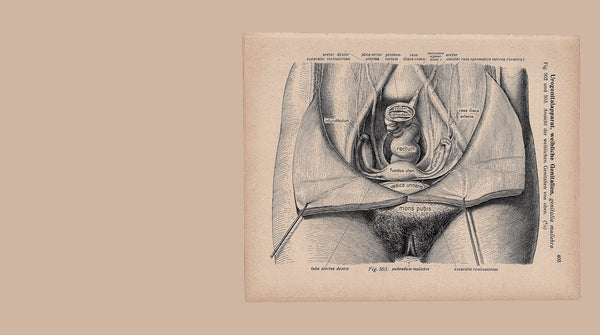
The clitoris is much larger than the visible glans. It extends 7 to 11 cm under the surface, with two "legs" and two "bulbs" that wrap around the vaginal opening. Stimulating these internal structures (often via vaginal entrance pressure or massage) can produce a fuller, more diffuse orgasm than glans-only stimulation.
3. G-Spot Orgasm
A type of internal vaginal orgasm triggered by stimulation along the upper wall of the vagina, usually with a "come hither" finger motion or a curved toy. Often more intense than external clitoral orgasms. Can sometimes trigger squirting or female ejaculation, though squirting isn't always tied to orgasm.
4. Cervical Orgasm
Deep internal orgasm triggered by gentle stimulation of the cervix, the lower part of the uterus. Often described as full-body and slow-building. Many women associate the cervix with pain rather than pleasure due to "deep bumps" during sex, but with care and arousal, the cervix is genuinely pleasurable. Sex should never hurt. If it does, slow down.
5. Blended Orgasm
When two or more erogenous zones are stimulated simultaneously and the orgasm draws from multiple sources at once. The most common version is clitoral plus vaginal (a vibrator on the clitoris during penetration). Often feels bigger and more full-bodied than single-zone orgasms.
6. Anal Orgasm
The anal area is densely innervated both externally and internally. External or internal stimulation can produce powerful, often full-bodied orgasms. Hygiene and proper lubrication matter for comfort and infection prevention. Bacterial reintroduction risk is real, so cleaning between transitions is important.
7. Nipple Orgasm
For some women, sustained nipple stimulation alone can lead to orgasm. The nipples and the clitoris share neural pathways in the brain, which is why nipple stimulation can build erotic tension that climaxes physically without genital touch.
8. Sleep Orgasm
Common enough to be worth naming. Many women orgasm in their sleep without any physical stimulation, sometimes from dreams, sometimes from no apparent trigger at all. Evidence that the body and mind can build pleasure without conscious involvement.
9. Core-gasm
Orgasm triggered by exercise, particularly core and lower-abdominal work like hanging leg raises or sustained ab fatigue. Less intense than typical orgasms but still pleasurable. Connected to the buildup and release of muscular tension in the lower body. More common than people realize.
10. Breath or Energetic Orgasm
Triggered through breath, movement, fantasy, and mindfulness rather than physical touch. Common in tantric practice. With time and practice, some people can build to full orgasmic experiences using breath and visualization alone.
11. Full-Bodied Orgasm
Less a separate type and more a quality of orgasm that extends beyond the genitals. Achieved through slow buildup, varied touch across the body, deep breathing, sound, and movement. Spreads pleasure rather than concentrating it.
12. Multiple Orgasms
When more than one orgasm occurs in succession, sometimes with brief pauses, sometimes continuously. More common in women than in men due to the absence of a refractory period in female anatomy. Often easier to access with consistent stimulation across multiple zones rather than penetration alone.
A Note on Pelvic Floor Health
Every type of orgasm involves the pelvic floor. The same muscles that contract during climax also support bladder control, post-sex bacterial clearance, and overall pelvic health. Strong, coordinated pelvic floor function makes orgasm fuller and the urinary tract more resilient.
For women dealing with stress incontinence, recurrent UTIs, or pelvic discomfort, a pelvic floor physical therapist can assess function and prescribe specific exercises. And since 85% of UTIs are caused by E. coli introduced during sex, daily prevention with UTI Biome Shield, plus a pre-intimacy capsule, is part of a comprehensive approach to enjoying sex without the cost of a UTI a few days later.
For the deeper clinical breakdown, see What Your Orgasm Tells You About Your Pelvic Floor.