





Hormones
Estrogen shapes how well your urinary tract defends itself. As it drops through perimenopause and menopause, the urinary tract and vaginal lining thin, making them more vulnerable to infection.


UTI Risk Quiz
Discover which factors may be contributing to your recurring UTIs, from sex and hormones to your microbiome, and what you can do about them.
Board-certified urogynecologist, Female Pelvic Medicine & Reconstructive Surgery
Health claims on this page are checked against published research.

Explore your next steps
Sex, hormonal changes, personal history, and everyday habits can all influence urinary health. But no two women experience UTIs exactly the same way.
Understanding your patterns is the first step toward finding a prevention approach that works for you.
Why do UTIs keep coming back?
Learn about recurrent UTIs, common triggers, and treatment options.
Chronic and recurrent UTIsHow does prevention work?
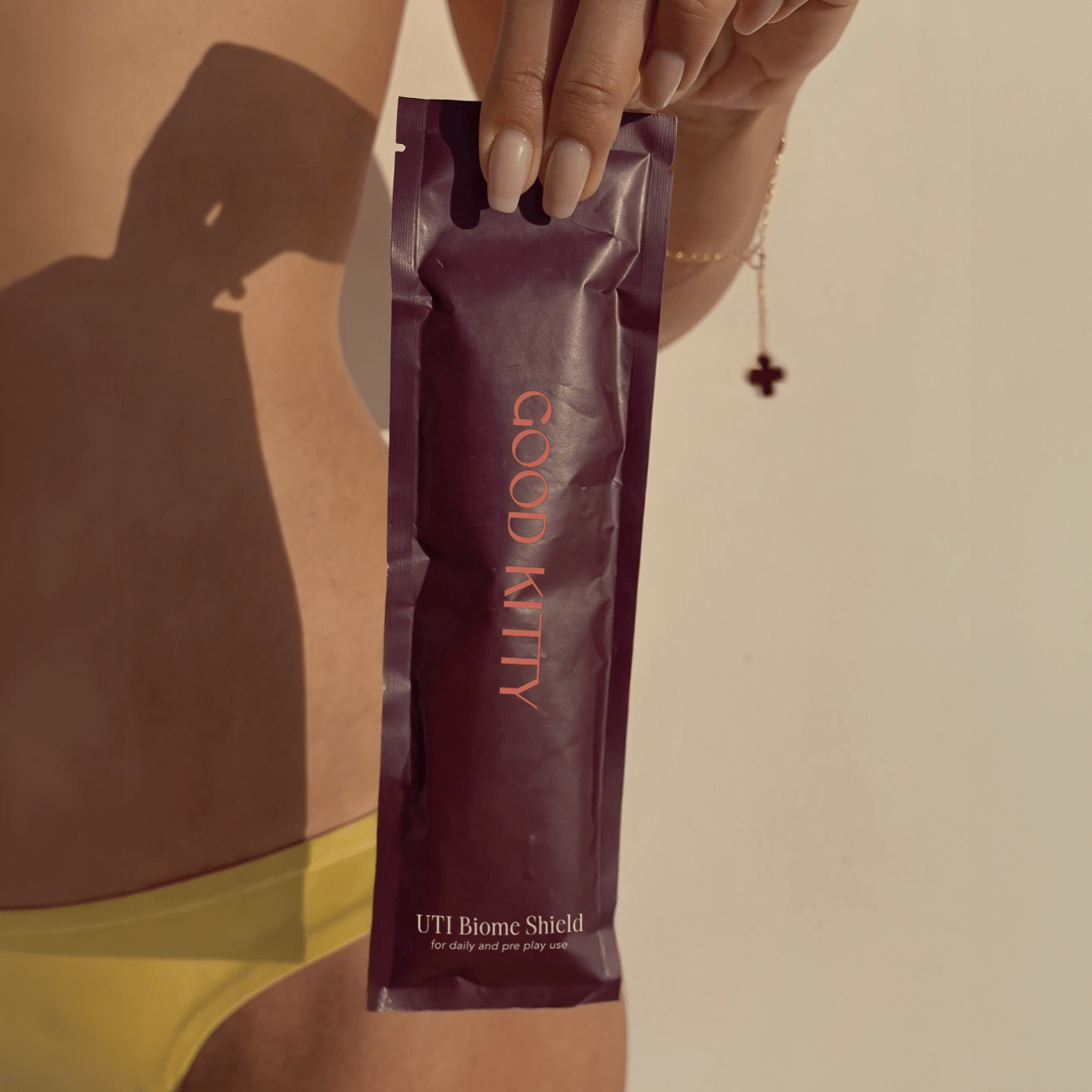
Explore the science behind cranberry PACs, D-mannose, and Good Kitty UTI Biome Shield®.
How it worksStill have burning questions?
Get answers to the questions women are often too embarrassed to ask.
UTI questions, answeredYOUR RISK FACTORS
From sex and hormones to your microbiome, several factors can influence your risk of recurring UTIs. Here's what the research tells us.
Estrogen shapes how well your urinary tract defends itself. As it drops through perimenopause and menopause, the urinary tract and vaginal lining thin, making them more vulnerable to infection.

The most common trigger for recurrent UTIs. Friction during intercourse moves bacteria toward the urethra, where they have a short path to the bladder.

A shorter urethra means bacteria have a faster, easier path to the bladder. Add in the proximity between the urethra and vagina, and everyday things become risk factors no one warned us about.

A healthy vaginal microbiome is one of your strongest defenses. When protective Lactobacillus bacteria dominate, they keep pH balanced and harmful bacteria in check. When that balance tips, UTIs become more frequent.

pH-altering products disrupt the balance that protects you. Fragranced soaps, spermicides, and douching all interfere with your natural bacteria balance and raise UTI risk.

Flushing matters as much as blocking. Drinking plenty of water helps clear bacteria from your urinary tract before they can take hold. Aim for six to eight glasses daily.
UTI RESEARCH
Research has identified several factors associated with recurrent UTIs, from sexual activity and hormonal changes to personal history. See which ones may apply to you.
A recent UTI
In a study of college women, about 1 in 4 had a second UTI within six months of their first.[5]
Perimenopause & menopause
As estrogen drops, the vaginal tissue and protective bacteria around the urethra change, and UTIs become more likely. The AUA guideline recommends vaginal estrogen for peri- and post-menopausal women with recurrent UTIs.[3]
Frequent sex
How often women had sex was the strongest risk factor for recurrence in young women.[1]
Spermicide use
Using spermicide in the past year raised the risk of recurrence.[1]
A new sexual partner
Having a new sex partner in the past year was linked to repeat UTIs.[1]
Family history of UTIs
Having a mother with a history of UTIs was linked to higher risk.[1]
Low fluid intake
In a trial of women with recurrent UTIs who drank little water, adding 1.5 liters a day led to about half as many repeat UTIs.[4]

WHAT YOU CAN DO NEXT
Understanding your UTI risk is just the beginning.
Your habits, hormones, and personal history can all influence recurring UTIs. A prevention routine starts with understanding your individual factors and finding the right support.
Doctor Formulated. Patent-Pending. Stop a UTI before it starts.
Choose Your Supply:
Choose Your Plan:
Free shipping · Flexible deliveries · Cancel anytime
What's inside the kit


This item is a recurring or deferred purchase. By continuing, I agree to the cancellation policy and authorize you to charge my payment method at the prices, frequency and dates listed on this page until my order is fulfilled or I cancel, if permitted.
What's inside the kit
Choose Subscribe & Save or Buy Once to continue.
We recommend 3-6 months of consistent use to see results.

Antibiotic Free

Doctor Formulated

Clinically Tested

30-Day Guarantee
Supplement Facts
UTI Biome Shield®
Serving Size: 1 Capsule
Servings Per Container: 60
| Ingredient | Amount Per Capsule | % DV |
|---|---|---|
| PACphenol™ | ||
| PAC-enriched extract from North American cranberry fruit (Vaccinium macrocarpon) juice concentrate | 250 mg | * |
| Proanthocyanidins (A-type PACs), 38 mg per BL-DMAC verification | ||
| Delivering whole fruit polyphenol profile including flavonols, flavan-3-ols, phenolic acids, and anthocyanidins | ||
| BioBlocD3™ | ||
| d-Mannose | 500 mg | * |
| Vitamin D3 (vegan cholecalciferol) | 10 mcg (400 IU) | 50% |
| Zinc (zinc picolinate) | 2 mg | 18% |
* Daily value not established.
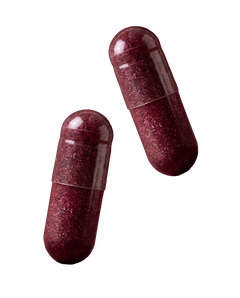
Other ingredients: purple carrot vegetable capsule (HPMC), microcrystalline cellulose, magnesium stearate, silicon dioxide.
Contains no GMOs, artificial preservatives, colors or sweeteners, no corn, dairy, soy, wheat, yeast, or gluten.
† These statements have not been evaluated by the Food and Drug Administration. This product is not intended to diagnose, treat, cure, or prevent any disease.
REAL RESULTS
Verified customer reviews of UTI Biome Shield®.
Read all reviewsFantastic So Far! I’m only about a month in but I was getting chronic post coital UTIs for about a year, about two every month on average!! Been using Good Kitty and it’s been helping a lot. UTI free for just over a month so we will keep going!
Haven't had one since! Get today! Has helped so much.
Heaven sent! After 4 UTIs in the last 6 months and 7 in the last year, I was desperate for relief. I’d become antibiotic resistant and hopeless. So far, Good Kitty has kept me UTI-free. Thrilled to find a treatment that actually helps.
FAQ
Looking for more ways to help prevent recurring UTIs? Learn how UTI Biome Shield® combines cranberry PACs and D-mannose in one daily routine.
No. It looks at how many common UTI risk factors and triggers apply to you. Only a doctor and a urine test can diagnose a UTI.
Doctors usually call UTIs recurrent when you have two in six months, or three in a year.[3]
See a doctor. Most UTIs need antibiotics, and untreated infections can spread to the kidneys.[6]
Staying hydrated may help: in one trial of women with recurrent UTIs who drank little water, adding 1.5 liters a day cut repeat UTIs nearly in half.[4] Cranberry PACs and D-mannose have also been studied for UTI prevention.[2][7]
UTI Biome Shield® combines cranberry PACs and D-mannose in one daily formula designed specifically for recurrent UTI prevention.
Your answers stay in your browser unless you ask us to email your results. If you do, we save them with your email so we can send your results and prevention tips. You can unsubscribe anytime.
The quiz is built around women's risk factors, like sex, hormones and the menstrual cycle. UTIs are less common in men and usually need a doctor's workup, so men with UTI symptoms should see a doctor.
Don't wait
A quiz can't replace a urine test. See a doctor promptly if you have any of these.[6]
Burning or pain when you pee
Fever or chills
Pain in your back or side
Blood in your urine
Symptoms while pregnant
Symptoms that don't improve or keep coming back
These statements have not been evaluated by the Food and Drug Administration. This product is not intended to diagnose, treat, cure, or prevent any disease.